C01
C01


Balcony Storage Certifications Decoded: CE, VDE4105, EN50549, IEC62619 and What They Really Mean
Picture this: you’ve just bought a sleek balcony energy storage system that promises lower electricity bills and backup power. It arrives with a bold “CE” logo on the box, so you assume the European Union has given it the green light. Then your German grid operator asks for a conformity certificate referencing VDE-AR-N 4105, and you discover the unit’s paperwork only mentions a generic safety test. Suddenly, the device you hoped would sit quietly on your balcony becomes a regulatory headache — and that’s if you’re lucky enough to notice before installation.
Balcony storage systems sit at the intersection of low‑voltage electronics, lithium battery safety, radio emissions, and — crucially — grid‑connection rules. The alphabet soup of certifications on a datasheet can feel overwhelming, but each logo or standard number tells a specific story about what has (and has not) been verified. Understanding these labels is not merely an academic exercise; it’s the difference between a legally compliant, safe installation and a product that your grid operator can — and sometimes will — reject.
This guide provides a practical framework for European apartment dwellers and consumers to interpret certification claims when shopping for balcony storage, so you can move from confusion to informed confidence.

The CE Mark Misunderstanding: It Is a Self‑Declaration, Not “EU Approval”
Many consumers believe the CE mark represents an official stamp of approval from a European government body. In reality, for most consumer electronics — including balcony storage systems — CE marking is built on a manufacturer’s self‑declaration of conformity. The manufacturer drafts an EU Declaration of Conformity (DoC), lists the applicable directives (e.g., Low Voltage Directive, Electromagnetic Compatibility Directive), and affixes the CE mark. No European agency reviews the product before it enters the market.
This doesn’t mean CE is meaningless. It is a legally binding declaration that the product meets all relevant EU harmonised legislation. The consequence, however, is that a “CE” logo alone tells you nothing about whether the device actually complies with the specific grid‑connection or battery safety standards required by your local grid operator. A manufacturer can legally self‑declare conformity and still omit the standards that matter most for a balcony storage unit — either through oversight or cost‑cutting.
As you will see shortly, the better question to ask is not “Does this product have CE?” but “Which specific standards are listed on its Declaration of Conformity?” That shift in questioning is the first step toward buying a product that will actually clear the grid‑operator registration hurdle.
Breaking Down Certification Categories: Electrical Safety, EMC, Wireless, Cyber, Battery, Transport, Environmental
Rather than treating “certified” as a yes/no checkbox, it helps to picture certifications as a set of risk‑domain tests, each addressing a different layer of safety and performance. For a balcony storage unit that contains a lithium battery, an inverter, and often wireless connectivity, the following categories are relevant — and you’ll want to see evidence for each.
| Certification / Standard | What It Covers | Why It Matters for Balcony Storage |
|---|---|---|
| CE (LVD, EMC) | Electrical safety (Low Voltage Directive), electromagnetic compatibility | Baseline EU market access; ensures the product won’t electrocute you or interfere with other devices |
| VDE‑AR‑N 4105 / EN 50549 | Generator connection to the low‑voltage grid | Required by many grid operators in Germany and referenced in several European countries; ensures the inverter can safely disconnect from the grid (anti‑islanding) and meets voltage/frequency tolerance. Always confirm current local requirements with your grid operator. |
| IEC 62619 (2022) | Safety of secondary lithium cells and batteries for industrial applications, including stationary storage | Critical for lithium battery safety; covers overcharge, short‑circuit, crush, and thermal propagation tests at the cell and battery pack level. Without it, the battery’s safety envelope is largely unverified |
| UN 38.3 | Transportation safety of lithium batteries | May be requested by shipping carriers; verifies basic transport safety (vibration, shock, thermal) but is not a substitute for stationary‑use safety standards. Confirm shipping requirements with your carrier. |
| RED (Radio Equipment Directive) | Wireless devices (Bluetooth, Wi‑Fi) in the EU | Needed if the storage unit offers app control. Without it, the wireless functionality may be non‑compliant |
| RoHS / REACH | Hazardous substances in electronics | Optional but indicative of responsible manufacturing |
Notice that IEC 62619:2022 is the current edition and applies to both cells and batteries for stationary industrial applications. It is not a full system‑installation code, but it is the closest internationally recognized standard for the battery’s safety performance. A balcony storage unit without a valid IEC 62619 test certificate from an accredited lab is essentially unverified for the very component that stores the most energy.
Similarly, VDE‑AR‑N 4105 remains the referenced grid‑connection rule in Germany for low‑voltage inverter‑based systems. Official KfW documentation still lists it as a requirement for registration with the grid operator, and no evidence suggests it has been superseded by EN 50549 in a legally binding way at the national level. Many products carry both standards as a precaution, which is a wise approach for manufacturers targeting multiple European markets.
Why “Has CE” Does Not Mean “Fully Compliant” — Common Certification Gaps
Suppose a homeowner in Munich spots a budget balcony storage unit online for €450. The listing boasts “CE certified” and includes a picture of the logo. The homeowner orders it, installs it on the balcony, and then attempts to register it with the local grid operator (a mandatory step in Germany through the Marktstammdatenregister). The operator requests a conformity declaration referencing VDE‑AR‑N 4105 or EN 50549, plus evidence that the inverter meets anti‑islanding requirements. The supplied DoC lists only the Low Voltage Directive and EMC Directive — no grid‑connection standard, no IEC 62619. The registration stalls. The homeowner is now stuck with a product that cannot legally be connected to the grid, facing a return that may be difficult because the unit has already been opened and used.
This before‑and‑after scenario illustrates a classic certification gap: the product has CE marking for basic electrical safety and electromagnetic compatibility, but it lacks the supplementary standards required by the grid operator. Other common gaps include:
- Missing IEC 62619 battery test: The battery may have only passed UN 38.3 transport tests, which are far less severe. This does not prove the cell is safe for years of stationary cycling inside a hot balcony enclosure.
- Wireless module not declared under RED: If the unit has Bluetooth or Wi‑Fi but the DoC omits the Radio Equipment Directive, the product is technically non‑compliant for its wireless capability.
- Using outdated editions: A test report citing IEC 62619:2017 is not the current edition (2022) — the older version may miss key tests that were added after real‑world incident analysis.
The takeaway is not that CE is useless, but that CE alone is merely the starting point. A fully compliant balcony storage system will list, on a single DoC, the combination of standards that cover electrical safety, EMC, battery safety, and grid‑connection behavior. Without that combination, you are gambling.
How to Verify Manufacturer Certification Claims Are Real When Shopping
Many consumers stop at the box logo; informed buyers examine the paperwork. When shopping for a balcony storage unit, or even after purchase, you can perform a few low‑effort checks that significantly reduce the risk of buying a non‑compliant device.
Check the Declaration of Conformity (DoC)
Every CE‑marked product must have a DoC that the manufacturer can provide upon request. Ask for it before buying. A well‑prepared DoC will list:
- The manufacturer’s name and address
- The product model number
- The applied harmonized standards, including EN 50549 or VDE‑AR‑N 4105 (grid connection), and IEC 62619:2022 (battery)
- A responsible signatory and date
If the DoC shows only generic safety standards (for example, a standard intended for audio/video or IT equipment), you’re likely looking at a product that has not been fully assessed for the balcony storage use case.
Verify Notified Body Numbers
For certain conformity modules under the EU Battery Regulation, a Notified Body may be involved. If the DoC references a Notified Body number, you can verify its validity in the EU’s NANDO database. This step ensures the body is accredited for the relevant directive. While not mandatory for every battery storage product, a Notified Body’s involvement adds a layer of independent scrutiny that cheap imports often avoid.
Trace the Test Laboratory
For IEC 62619 certificates, identify the issuing laboratory and confirm its accreditation scope (e.g., via ILAC or national accreditation body records) covers IEC 62619:2022 testing. If the certificate is a scan without a lab name, or from a lab you cannot trace, treat it with skepticism. The safest path is to buy from brands that publicly list their full certification package — like the units that explicitly declare EN 50549, VDE 4105, IEC 62619, and UN 38.3 on their product pages, and then make the test reports available for download.
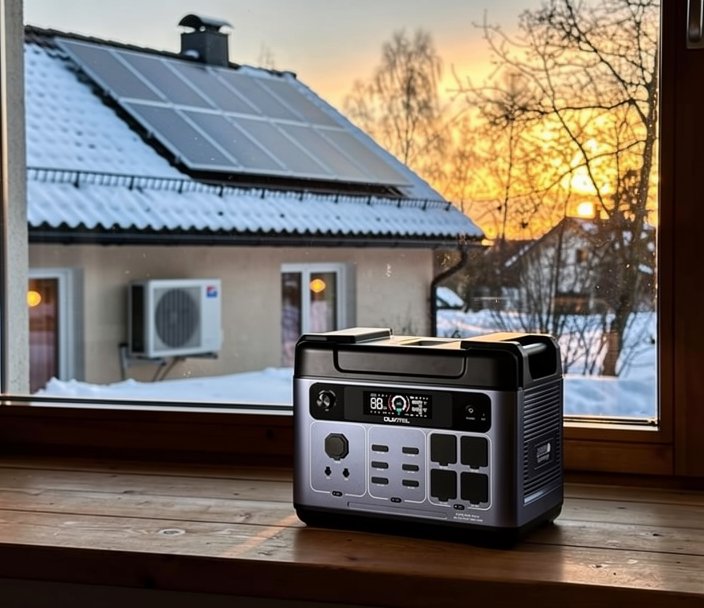
For example, a balcony storage model that includes in its specifications the line “Certifications: EN50549, VDE4105, CE, RED, REACH, ROHS, UN38.3” gives you a much stronger starting point than one that only says “CE certified.” This is not an endorsement of any single brand; it’s a signal of transparency that makes verification straightforward. One such device that meets these criteria is the OUKITEL EP2500 balcony solar storage system, which publicly states its certification suite and thus provides a reference point for what a fully‑declared balcony storage product can look like. The more standards listed, the fewer gaps you have to fill in yourself.
Ask the Grid Operator
Before purchase, email your local grid operator a sample unit’s certification documents and ask if the device would be accepted for connection. Most operators are responsive, and a five‑minute email can prevent weeks of frustration.
Real‑World Before vs. After: Learning to Verify
Before: A consumer in Berlin bought a unit based on a Facebook marketplace listing, attracted by the price and the “CE” logo. When the DoC arrived, it was a one‑page document listing only a generic safety standard not relevant to grid‑connected storage. The grid operator refused the application. Return shipping cost half the unit’s price, and the seller disappeared.
After: The same consumer, having learned, shortlisted two products that provided full DoCs with EN 50549/IEC 62619 references. After sending the documents to the grid operator and receiving a confirmation of acceptability, they purchased, registered the unit within one month, and have been operating without incident. The small extra cost of a compliant unit was smaller than the loss from the first attempt.
The Practical Risks of Missing Certifications: Returns, Compliance Issues, Local Bans
While the provided official sources do not show a catalogue of recalls or local bans specifically for balcony storage units in Germany or other EU countries, the legal framework exists, and enforcement occurs on an individual level through grid‑operator registration. The German Baunutzungsverordnung permits small solar installations in principle, but connection to the grid is conditional on meeting the technical rules — which brings us back to certification.
The practical risks of missing essential certifications are not hypothetical:
- Registration refusal: If your unit cannot demonstrate conformity to VDE‑AR‑N 4105 or EN 50549, the grid operator in Germany can (and will) refuse to allow it to feed into the grid. In some cases, they may require immediate disconnection.
- Warranty and insurance: Many home insurance policies exclude damage caused by non‑compliant electrical equipment. If a battery fire occurs and the unit lacked IEC 62619 certification, the insurer may deny the claim.
- Return difficulties: Heavy battery units are expensive to ship back, and cross‑border sellers may challenge a refund if the product was used.
- Market surveillance: Although EU authorities do not systematically pre‑approve every product, national market surveillance bodies can issue withdrawal orders for non‑compliant products after they appear on the market. This can leave you with an unsupported device.
None of this means that non‑compliant products are flooding the market with impunity; reputable manufacturers invest in full certification precisely to avoid these downstream issues. But the asymmetry between a low‑cost listing and a high‑compliance device is real, and the consumer’s best defence is the ability to read the certification label beyond the CE mark.
Conclusion: If You See This, Then Do That
When choosing a balcony storage system, apply these if‑then rules:
- If the product claims CE but the DoC does not list applicable grid‑connection standards (such as EN 50549 / VDE‑AR‑N 4105) and IEC 62619:2022, then it may not be ready for a German grid connection — check with your operator before proceeding.
- If the DoC lists the standards but lacks a verifiable test laboratory name, then request the full test report; if unavailable, treat it as unproven.
- If the product has wireless features but no RED statement, then the wireless functionality may be non‑compliant; consider whether you need the app feature at all.
- If you cannot obtain a DoC before purchase, then email your grid operator with the seller’s information and ask for pre‑approval — an ounce of prevention saves a kilo of returns.
Certification labels are not magic; they are a language. Once you learn to read that language, you stop being impressed by logos and start asking the right questions — and that shift is what separates a hassle‑free balcony storage experience from a costly mistake.
Frequently Asked Questions
What does CE certification actually mean?
CE marking is a manufacturer’s declaration that the product meets the essential requirements of all applicable EU health, safety, and environmental protection legislation. It does not mean that the EU or a third party independently tested or approved the device before it went on sale. For balcony storage, the CE mark alone does not prove compliance with the specific grid‑connection or battery safety rules that grid operators require.
Is CE certification enough for balcony storage?
No. CE is the starting point, but you also need evidence that the inverter complies with applicable grid‑connection standards (such as EN 50549 or VDE‑AR‑N 4105, depending on operator requirements), and that the battery has been tested to IEC 62619:2022. Without these additional standards, the product may not pass grid‑operator registration in countries like Germany, even if it carries the CE mark.
What is IEC 62619 and why does it matter?
IEC 62619:2022 is an international standard that specifies safety requirements and tests for secondary lithium cells and batteries used in industrial applications, including stationary storage. It evaluates overcharge, short‑circuit, crush, and thermal propagation risks. For a balcony storage battery, this standard provides independent assurance that the battery won’t fail dangerously under stress. Without it, the battery’s safety envelope is essentially unverified for long‑term stationary use.
How can I check if a certification claim is real?
Request the EU Declaration of Conformity from the manufacturer and look for specific standards (EN 50549, VDE‑AR‑N 4105, IEC 62619). Verify any Notified Body number in the EU NANDO database, and check the issuing laboratory’s accreditation scope for IEC 62619 via national accreditation bodies. If the manufacturer cannot provide a traceable test report, be cautious — legitimate companies can usually supply this documentation quickly.
Information in this article was fact-checked against current sources in August 2026. Policies, incentive programs, and regulations change frequently — always confirm current terms with official sources before making financial or legal decisions.
Latest articles

OUKITEL Power Showcases Full-Scenario Energy Storage Solutions at the 140th Canton Fair
OUKITEL Power Brings Full-Scenario Energy Storage Solutions to Intersolar Middle East 2026 in Dubai
OUKITEL Showcases Energy Storage Solutions at Intersolar South America 2026, Accelerating Expansion into Latin America
The European Homeowner’s Blueprint to Slashing Heat Pump Bills with Battery Storage and Smart Tariffs
Sizing Solar and Battery for a Winter Heat Pump: A Cold‑Climate Guide for Europe (Germany, Sweden, Ukraine)