C01
C01


Draagbare powerstations voor bouwplaatsen: de complete gids voor aannemers
Decennialang was het gezoem van een benzinegenerator het geluid van de bouw. Het voedde de zaag, laadde de accu's en verlichtte de werkplek. Maar dat vertrouwde geluid brengt een lange lijst frustraties met zich mee: brandstofdiefstal, uitlaatgassen, geluidsoverlast, frequent onderhoud en het gedoe van het sjouwen met zware jerrycans op de bouwplaats. Steeds meer aannemers zoeken een schoner, stiller en voorspelbaarder alternatief.
Maak kennis met de draagbare powerstation voor de bouw. Deze accu-aangedreven units zijn snel volwassen geworden en bieden voldoende vermogen, capaciteit en duurzaamheid om traditionele generatoren op veel bouwplaatsen te vervangen. Maar ze zijn geen één-op-één vervanging. Het kiezen van de juiste draagbare powerstation voor aannemers vereist inzicht in een andere set afwegingen: vermogen versus looptijd, capaciteit versus draagbaarheid, en aanschafkosten versus operationele kosten op de lange termijn. Deze gids legt alles uit wat je moet weten om een slimme, praktische beslissing te nemen voor je team en je financiën.

Waarom bouwplaatsen generatoren vervangen door accu-powerstations
De overstap van generatoren naar accuvoeding gaat niet alleen om groen doen, maar om praktisch zijn. Generatoren hebben een bekende reeks problemen die aannemers geld en tijd kosten.
Het brandstofprobleem. Benzine is een risico. Het wordt gestolen, gemorst en onjuist opgeslagen. Het vereist dagelijkse ritten naar het tankstation en constante controle op de locatie. Een generator die een typisch team van gereedschap draait voor een 8-urige werkdag kan 10 tot 15 liter brandstof verbruiken. Vermenigvuldig dat met 20 werkdagen per maand, en de brandstofrekening alleen al kan enkele honderden euro's overschrijden. Tel daarbij de verloren productiviteit door tankritten en het risico op brandstofdiefstal, en de kosten lopen verder op.
Het geluids- en uitlaatprobleem. Geluidsklachten van buren of lokale autoriteiten kunnen een bouwplaats vroegtijdig stilleggen of leiden tot boetes. Uitlaatgassen van een generator die in een gedeeltelijk afgesloten ruimte draait, vormen een ernstig gezondheidsrisico. Koolmonoxidevergiftiging door generatoren is een bekend gevaar op bouwplaatsen, en veel gemeenten hebben nu strikte geluidsverordeningen die het gebruik van generatoren in woonwijken beperken.
Het onderhoud. Generatoren vereisen regelmatige oliewissels, vervanging van bougies, het reinigen van luchtfilters en carburateuronderhoud. Een generator die twee weken ongebruikt stilstaat, weigert vaak te starten wanneer nodig. Deze onderhoudslast is een onzichtbare belasting op productiviteit waar veel aannemers geen rekening mee houden in hun budget.
Een draagbare powerstation voor de bouw lost alle drie de problemen tegelijk op. Nul uitstoot betekent dat het binnen, in sleuven of nabij werknemers kan draaien zonder gevaar. Bijna geruisloze werking betekent geen geluidsklachten, zelfs niet bij vroege ochtendstarts in woonwijken. En zonder bewegende delen in het stroomopwekkingsproces is er vrijwel geen onderhoud: geen olie om te verversen, geen bougies om te vervangen, geen carburateur om te reinigen. Laad het op, gebruik het, laad het weer op. Dat is alles.
Hoe kies je tussen vermogen, looptijd en draagbaarheid op een bouwplaats
Elke draagbare powerstation dwingt je tot een afweging tussen drie variabelen: continu vermogen (watt), bruikbare capaciteit (wattuur) en fysiek gewicht. Je kunt niet alle drie tegelijk hebben met de huidige accutechnologie. Het begrijpen van deze driehoek is de sleutel tot het kiezen van de juiste draagbare industriële powerstation voor jouw specifieke bouwplaats.
Vermogen (watt) – Wat kan het starten? De AC-vermogensclassificatie bepaalt welke gereedschappen de powerstation continu kan laten draaien. Een cruciale nuance: veel elektrisch gereedschap heeft een startpiek die 2-3 keer het nominale vermogen is. Een tafelzaag kan bijvoorbeeld op 1800W draaien, maar vereist een piek van 3600W om het blad op snelheid te brengen. Het piekvermogen van de powerstation moet hoog genoeg zijn om deze piekbelastingen aan te kunnen zonder dat de unit uitschakelt. Een draagbare powerstation voor de bouwplaats zoals de OUKITEL P5000 Pro biedt 4000W continu vermogen en 8000W piekvermogen, waarmee grote cirkelzagen, afkortzagen en zelfs sommige compressor-aangedreven spijkermachines comfortabel kunnen worden bediend.
Capaciteit (Wh) – Hoe lang kan het draaien? Wattuur bepaalt de looptijd. Een 2048Wh powerstation kan theoretisch een 1000W-gereedschap ongeveer 2 uur laten draaien, maar de werkelijke looptijd is altijd lager door omvormerverliezen (meestal 10-15%). De praktische conclusie: als je team een combinatie van gereedschappen en lampen gebruikt die continu 800W verbruikt, gaat een station met 2048Wh capaciteit ongeveer 2 tot 2,5 uur mee. Voor een volledige 8-urige dienst heb je een grotere capaciteit nodig, zoals 5120Wh (P5000 Pro), of overweeg om overdag bij te laden via AC of zonne-energie.
Draagbaarheid (gewicht) – Kun je het verplaatsen? Een 5000Wh powerstation weegt ongeveer 50 kg. Dat is niet iets dat je gemakkelijk de trap op draagt of over een modderige locatie meeneemt. De meeste grotere units hebben wielen en een handvat, waardoor ze verplaatsbaar zijn op vlakke ondergronden, maar niet echt draagbaar zoals een kleine generator. De afweging is duidelijk: als je hoog vermogen en lange looptijd nodig hebt voor een meerdaagse klus, accepteer dan dat de unit zwaar is en plan hoe je hem verplaatst (hellingen, karren, meerdere werknemers).
Beslisregel: Begin met het grootste gereedschap dat je team zal gebruiken en noteer het nominale en piekvermogen. Kies een powerstation waarvan zowel het continu vermogen als het piekvermogen boven die getallen liggen. Bereken vervolgens je totale dagelijkse energiebehoefte (watt × gebruiksuren) en voeg 20% marge toe (hieronder uitgelegd). Bepaal ten slotte of het resulterende gewicht beheersbaar is voor de typische opbouw- en afbraakwerkzaamheden van je team.
Het bepalen van de juiste maat powerstation voor je team: de 20%-margeregel
Een van de meest voorkomende fouten die aannemers maken bij het kopen van een draagbare powerstation voor bouwplaatsen is het te klein inschatten van de capaciteit. Ze berekenen de exacte wattuur-behoefte van hun gereedschap, kopen een unit die precies overeenkomt, en ontdekken dan dat hij na 3 uur uitschakelt omdat ze lampen, telefoonladers, een kleine radio en omvormerinefficiëntie vergaten.
De 20%-margeregel: Bereken je totale geschatte dagelijkse energieverbruik in wattuur en vermenigvuldig dit met 1,2. Dat is de minimale bruikbare capaciteit die je nodig hebt. Als je gereedschap en accessoires bijvoorbeeld naar verwachting 3500Wh verbruiken gedurende een werkdag, moet je een powerstation kiezen met ten minste 4200Wh bruikbare capaciteit (3500 × 1,2).
Waarom 20%? Drie redenen. Ten eerste is de efficiëntie van de omvormer meestal rond de 88-92%, wat betekent dat je 8-12% van de opgeslagen energie verliest als warmte. Ten tweede reserveert het batterijbeheersysteem (BMS) doorgaans een kleine buffer om diepe ontlading te voorkomen, dus de bruikbare capaciteit is iets lager dan de nominale capaciteit. Ten derde duiken er altijd onverwachte belastingen op: een teamlid laadt een accupack op, een boormachine draait langer dan verwacht, of een werklicht blijft aan tijdens de lunch. De 20%-buffer absorbeert deze zonder dat je team zonder stroom komt te zitten.
Realistisch scenario: Een betonploeg op een woonlocatie draait een mixer (1000W gedurende 4 uur), twee afkortzagen (1800W gecombineerd gedurende 3 uur) en verschillende werklichten (400W gedurende 8 uur). Totaal verbruik: (1000×4) + (1800×3) + (400×8) = 4000 + 5400 + 3200 = 12.600Wh. Met 20% marge is het doel 15.120Wh. Dat vereist meerdere powerstations of een zeer groot uitbreidbaar systeem zoals de OUKITEL BP3000 met batterij-uitbreidingspakketten, die kan opschalen tot 16.384Wh. Zonder de marge zou de ploeg rond uur 6 zonder stroom komen te zitten, wat een kostbare stilstand veroorzaakt.
Huren of kopen: wanneer een draagbare powerstation beter is dan een generator (en wanneer niet)
Elke aannemer staat voor dezelfde beslissing: moet ik dit materiaal kopen of per klus huren? Zo werkt de berekening voor draagbare powerstations versus generatoren.
Een draagbare powerstation kopen. De aanschafkosten zijn hoger dan bij een vergelijkbare benzinegenerator, maar de totale eigendomskosten over 10 jaar zijn lager. Een 4000W-benzinegenerator kost nieuw ongeveer €1.200-€2.500. Over 10 jaar vervang je hem minstens één keer (levensduur 3-5 jaar bij regelmatig gebruik), geef je €3.000-€6.000 uit aan brandstof (bij huidige prijzen) en betaal je €500-€1.000 aan onderdelen (olie, filters, bougies). Totale kosten: ongeveer €6.000-€11.000 over tien jaar.
Een 4000W draagbare powerstation kost ongeveer €2.500-€4.000 in aanschaf. Met een 10-jarige, 5000+ cycli LiFePO4-accu hoef je de accu het hele decennium niet te vervangen. Brandstofkosten zijn nul. Onderhoudskosten zijn nul. Totale kosten: €2.500-€4.000. Dat is een besparing van €3.000-€7.000 over tien jaar, alleen al op brandstof en onderhoud.
Een draagbare powerstation huren. Huren is de juiste keuze in twee specifieke gevallen: (1) je hebt een eenmalige klus met ongebruikelijke stroomvereisten, zoals nachtwerk met enorme verlichting, of (2) je hebt stroom nodig voor minder dan 10 werkdagen per jaar. Huurtarieven voor een draagbare powerstation voor de bouwplaats variëren van €40-€100 per dag. Als je een 5000Wh-unit nodig hebt voor een klus van 3 weken, kan de huurprijs van €600-€1.500 logischer zijn dan een aankoop van €3.000—als je de unit daarna echt niet meer nodig hebt.
De fout om te vermijden: Huur nooit een powerstation voor meer dan 30 werkdagen per jaar. Op dat moment overschrijden de cumulatieve huurkosten de aankoopprijs van een vergelijkbare unit, en bezit je niets. Als je een powerstation gemiddeld zelfs maar 2 dagen per week gebruikt, koop er dan een.
Veiligheid, duurzaamheid en stof: wat powerstations voor de bouwplaats moeten doorstaan
Bouwplaatsen zijn ruwe omgevingen voor elektronica. Stof, trillingen, temperatuurschommelingen en onbedoelde stoten zijn dagelijkse realiteit. Een consumenten-powerstation bedoeld voor weekendkamperen zal op een bouwplaats snel falen.
Stofindringing. Het meest voorkomende faalpunt is stof dat via de koelopeningen naar binnen komt en de ventilatoren blokkeert. Powerstations met IP-geclassificeerde behuizingen bieden enige bescherming, maar veel bouwkwaliteitsunits vertrouwen op passieve koeling of stofbestendige ventilatorontwerpen. Een praktische test: controleer of de luchtinlaat een verwijderbaar stoffilter heeft. Zo niet, verwacht dan dat je de unit regelmatig van binnen schoonmaakt, vooral bij gips- of betonwerk.
Bedrijfstemperatuur. De meeste lithium-accusystemen werken veilig tussen 0°C en 40°C. Op een ijskoude winterbouwplaats kan een powerstation dat 's nachts in een onverwarmde bestelwagen staat, mogelijk niet functioneren totdat het is opgewarmd. Omgekeerd kunnen de interne temperaturen in een gesloten bouwkeet in de zomer boven de 40°C uitkomen, waardoor het BMS het vermogen vermindert of uitschakelt voor thermische bescherming. Plan je opslaglocatie dienovereenkomstig: in een verwarmde keet of in een schaduwrijke, geventileerde ruimte.
Trillingen en schokken. Powerstations worden meestal vervoerd in de laadruimte van een werkbus. Herhaalde trillingen kunnen na verloop van tijd interne verbindingen losmaken. Zoek naar units met een robuuste behuizing, trillingsgedempte accubevestigingen en stevige vergrendeling op alle stopcontactafdekkingen. Sommige fabrikanten bieden nu optionele transportkoffers met schuimrubber inzetstukken voor gebruik op de bouwplaats aan; dit is een waardevolle investering voor dagelijks transport.
Chemische veiligheid. LiFePO4 (Lithium-ijzerfosfaat) is inherent veiliger dan traditioneel lithium-ion (NMC) voor gebruik op de bouwplaats. Het is bestand tegen thermische runaway en heeft een veel hogere ontbrandingstemperatuur. Elke draagbare powerstation voor aannemers zou LiFePO4-cellen moeten gebruiken. De OUKITEL P2001 Plus, P5000 Pro en BP3000 gebruiken allemaal LFP-chemie, met veiligheidscertificeringen waaronder UN38.3, CE en RoHS.
De markt voor bouwpowerstations in 2025: wat verandert er voor aannemers
Het adopteren van nieuwe technologie op een bouwplaats is altijd een risico. Maar de markt voor accu-powerstations heeft een punt bereikt waarop de technologie bewezen is, de prijzen dalen en het ondersteunende ecosysteem groeit. Hier zijn de belangrijkste trends waar aannemers de komende jaren op moeten letten.
Dalende kosten per wattuur. De kosten van accupakketten zijn het afgelopen decennium met ongeveer 80% gedaald. Een 5000Wh draagbare powerstation die in 2020 €6.000 kostte, kost nu ongeveer €3.500. Deze trend zet door naarmate de productie opschaalt en LFP-chemie de standaard wordt. Verwacht dat de terugverdientijd ten opzichte van een generator nog verder krimpt.
Geïntegreerd zonne-opladen. De mogelijkheid om een powerstation op te laden met draagbare zonnepanelen verandert de manier waarop afgelegen bouwplaatsen werken. Een zonnepaneelopstelling van 1000W kan een 5120Wh-accu in ongeveer 5-6 uur direct zonlicht volledig opladen. Dit betekent dat een bouwplaats zonder netstroom onbeperkt kan draaien op zonne-energie alleen, zolang de dagelijkse werkbelasting de dagelijkse oplaadcapaciteit niet overschrijdt. Voor aannemers die werken aan landelijke infrastructuur, zendmasten of agrarische projecten is dit een gamechanger. Voor een diepere blik op deze toepassing, zie onze gids over zonne-energie aangedreven draagbare powerstations voor bouwplaatsen.
Slimme belastingsbeheer. Powerstations met app-bediening stellen locatieleiders in staat om het verbruik in realtime te monitoren, maximale uitvoerlimieten in te stellen en zelfs het opladen te plannen tijdens daluren. Dit is vooral waardevol wanneer meerdere teams één stroombron delen en je stroombudgetten moet handhaven zonder hele locaties stil te leggen.
Modulaire uitbreiding. Stapelbare accusystemen, zoals de OUKITEL BP3000 met zijn mogelijkheid om uit te breiden van 2048Wh naar 16.384Wh, stellen aannemers in staat om precies de capaciteit te kopen die ze vandaag nodig hebben en later meer toe te voegen. Dit elimineert de noodzaak om de hele unit te vervangen naarmate de werkbelasting groeit. Het betekent ook dat één omvormer en laadsysteem een groeiende vloot accu's kan bedienen, waardoor de totale investering afneemt.
Afweging om te overwegen: Ondanks al deze voordelen kunnen accu-powerstations nog steeds niet tippen aan een dieselgenerator bij extreme kou of voor energie-intensieve gereedschappen die dagenlang continu draaien. Als je bouwplaats vereist dat een 7,5kW-lastransformator of een grote betontriller 12-urige diensten draait, heb je mogelijk nog steeds een generator nodig voor die specifieke taak. Maar voor 90% van de dagelijkse stroombehoeften van de typische aannemer—zagen, boormachines, spijkermachines, compressoren, verlichting, acculaden—is een draagbare powerstation nu de kosteneffectievere en praktischere keuze.
Voor een praktische blik op welke gereedschappen en machines een powerstation precies aankan, zie ons artikel over wat draagbare powerstations op een bouwplaats kunnen aandrijven.
Conclusie
De beslissing om over te stappen van een benzinegenerator naar een draagbare powerstation voor de bouw komt neer op een eenvoudige evaluatie: bereken de totale eigendomskosten over 3, 5 en 10 jaar, inclusief brandstof, onderhoud en stilstand. Voor de meeste aannemers die een typische mix van elektrisch gereedschap, lampen en laadstations gebruiken, zal een 4000W tot 5000Wh unit met LiFePO4-chemie zich in 2-3 jaar terugverdienen vergeleken met een generator—en de rompslomp van brandstof, geluid en uitlaatgassen volledig elimineren. De kanttekening: als je werk bestaat uit hoog-ampèrage enkelvoudige gereedschapsbelastingen boven 5000W continu of in extreme kou (onder -10°C), houd dan een generator voor die specifieke gevallen. Voor al het andere is de toekomst accu-aangedreven, stil en onderhoudsvrij. Begin met het inventariseren van je typische dagelijkse stroomverbruik, pas de 20%-margeregel toe en koop een unit die past bij je fysieke transportbeperkingen. Je team—en je buren—zullen je dankbaar zijn.
Veelgestelde vragen
Hoeveel watt moet een typische powerstation voor een bouwplaats leveren?
Voor een typisch team dat een mix van een cirkelzaag (1500W), een afkortzaag (1800W), een compressor (1200W) en algemene werklichten (400W) gebruikt, heb je ten minste 3000W continu vermogen en 5000W piekvermogen nodig. Het piekvermogen is in veel gevallen belangrijker dan continu, omdat het de startpiek van cirkelzagen en compressoren opvangt. Een unit met 4000W continu / 8000W piekvermogen, zoals de OUKITEL P5000 Pro, biedt comfortabele marge voor de meeste residentiële en lichte commerciële teams.
Kan een draagbare powerstation een benzinegenerator op een bouwplaats vervangen?
Voor 90% van de typische bouwtaken—het voeden van zagen, boormachines, lampen en acculaders—kan een draagbare powerstation een benzinegenerator volledig vervangen. De uitzonderingen zijn hoogvermogen continue belastingen zoals grote lasapparaten (5kW+), zware betontrillers die de hele dag draaien en extreme kou (onder -10°C). Voor die gevallen blijft een generator de praktischere optie. Voor al het andere is accuvoeding veiliger, stiller en goedkoper in gebruik.
Is het veilig om een draagbare powerstation buitenshuis te gebruiken in regen of stof?
Ja, maar met voorwaarden. De meeste draagbare powerstations zijn bedoeld voor gebruik binnenshuis en mogen niet direct aan regen worden blootgesteld. Gebruik ze onder een afdak, zeildoek of in een droge trailer. Voor stoffige omgevingen (gips, betonslijpen) plaats je de unit op een verhoogd platform weg van de stofzone en bedek je hem wanneer hij niet in gebruik is. Veel units hebben verwijderbare stoffilters—reinigen wekelijks op zwaar stoffige locaties. Water en bouwelektronica zijn geen vrienden, dus zorgvuldigheid is vereist.
Wat is de terugverdientijd van kopen versus huren van een draagbare powerstation?
Voor een draagbare powerstation van €3.000 die voor €80 per dag wordt gehuurd, geldt: als je hem meer dan 38 dagen gebruikt, kun je beter kopen dan huren. Voor typische aannemers die de unit 100-200 dagen per jaar gebruiken, is de terugverdientijd minder dan 6 maanden. Daarna is elke werkdag pure besparing vergeleken met huren. En vergeleken met het bezitten van een generator zijn de brandstof- en onderhoudsbesparingen aanzienlijk, doorgaans €300-€700 per jaar.
Hoe bereken ik de looptijd wanneer ik meerdere gereedschappen en lampen tegelijk gebruik?
Bereken het nominale vermogen van elk gereedschap en elke lamp die je tegelijkertijd gebruikt. Tel ze bij elkaar op. Deel vervolgens de nominale capaciteit van de powerstation (Wh) door dat totale vermogen en vermenigvuldig met 0,85 om rekening te houden met omvormerverliezen. Bijvoorbeeld: een 2048Wh-unit die 800W aan gecombineerd gereedschap draait: (2048 ÷ 800) × 0,85 ≈ 2,2 uur. Voor een volledige 8-urige dienst bij dezelfde belasting heb je ongeveer 8000Wh bruikbare capaciteit nodig, wat een grotere unit of batterij-uitbreidingspakketten vereist.
Latest articles
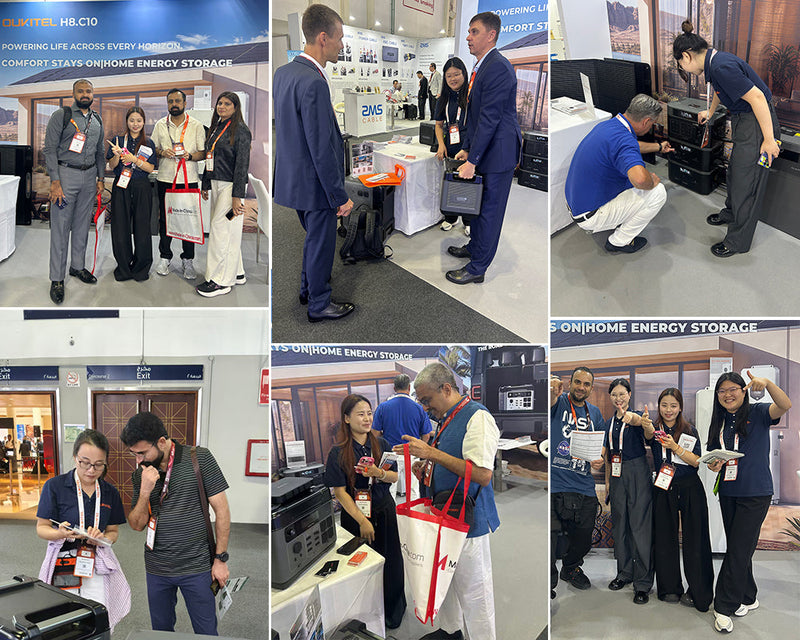
OUKITEL Power Brings Full-Scenario Energy Storage Solutions to Intersolar Middle East 2026 in Dubai
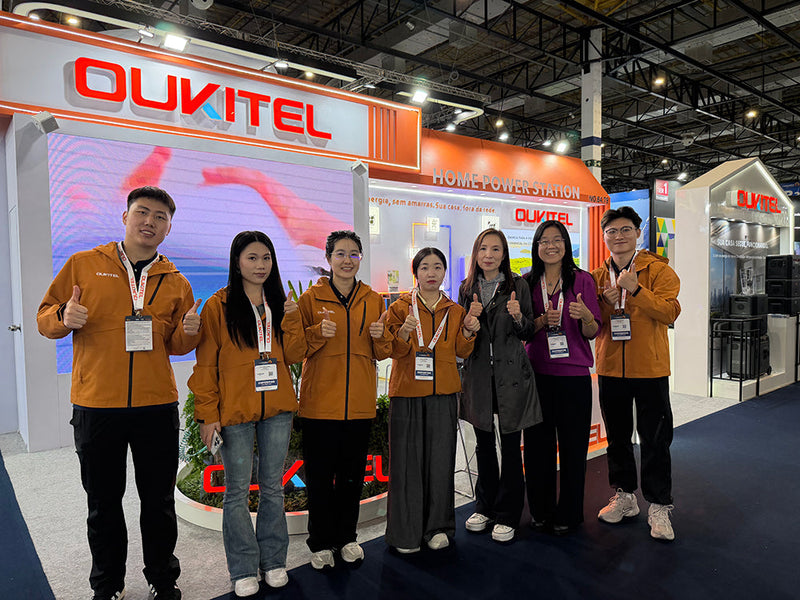
OUKITEL toont energieopslagoplossingen op Intersolar South America 2026 en versnelt uitbreiding naar Latijns-Amerika
De Europese huiseigenaarsgids om warmtepomprekeningen te verlagen met thuisbatterijen en slimme tarieven
Zonnepanelen en batterij dimensioneren voor een winterwarmtepomp: een koude-klimaatgids voor Europa (Duitsland, Zweden, Oekraïne)
Overlevingsgids voor warmtepompen bij stroomuitval: uw batterij rekken tijdens meerdaagse winteruitval