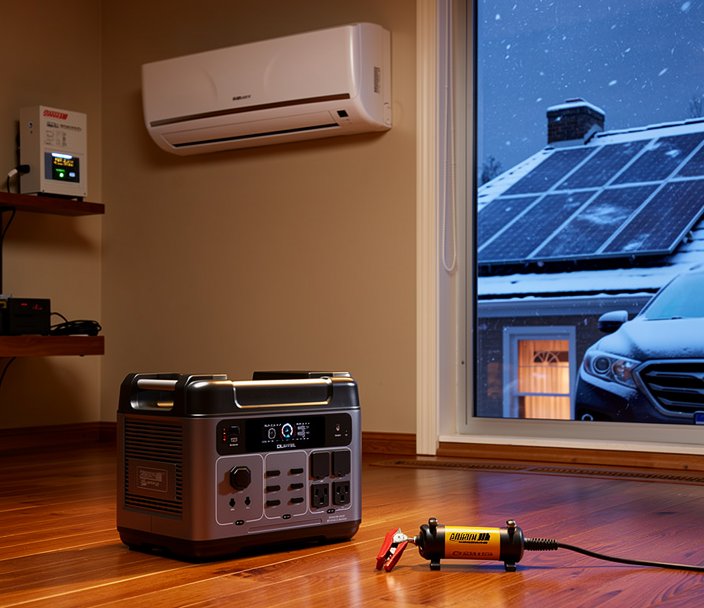
C01
C01


Capacité et puissance d'une batterie de balcon : comment calculer les besoins réels de votre foyer
Q : Je loue un appartement de 2 pièces à Munich et viens d'installer une centrale solaire de balcon de 800 W. Je suis prêt à ajouter une batterie de stockage, mais les conseils en ligne sont déroutants. 2 kWh ? 5 kWh ? Comment savoir quelle taille me convient réellement, sans payer trop cher ni manquer d'énergie chaque soir ?
R : C'est la question la plus importante que tout acheteur de centrale solaire de balcon puisse se poser. La plupart des erreurs de dimensionnement viennent d'une confusion entre les watt-heures (capacité) et les watts (puissance), et de l'absence d'un audit réaliste de votre consommation. Dans ce guide, je vais vous expliquer une méthode pratique, étape par étape, pour mesurer votre propre consommation, choisir la bonne capacité de batterie et éviter les pièges courants—y compris les pertes cachées, les effets du froid et la limite invisible imposée par les réglementations allemandes sur le réseau. Commençons par le concept que presque tout le monde comprend mal.
Capacité (Wh) vs Puissance (W) : la différence clé que la plupart des gens se trompent
Cela semble simple, mais c'est la cause de presque tous les achats surdimensionnés ou sous-dimensionnés.
Q : Quelle est la différence entre Wh et W ?
La valeur nominale en watt-heure (Wh) de la batterie indique la quantité d'énergie qu'elle peut stocker—considérez-la comme la taille du réservoir de carburant. La valeur en watt (W) indique la puissance qu'elle peut fournir à un moment donné—comme le diamètre du tuyau de carburant. Une batterie de 2 000 Wh pourrait, en théorie, faire fonctionner un radiateur de 2 000 W pendant une heure, ou un réfrigérateur de 200 W pendant dix heures. Mais si l'onduleur de la batterie est limité à 600 W, il ne peut tout simplement pas démarrer le radiateur, quelle que soit l'énergie stockée.
Pour le stockage sur balcon, les deux chiffres comptent. En Allemagne, l'injection dans le réseau est plafonnée à 800 W, donc même si votre batterie peut fournir plus, le chemin connecté au réseau ne peut pas dépasser cette limite pour l'exportation. Cependant, de nombreux systèmes de stockage de balcon modernes (comme le OUKITEL EP2500) offrent un mode hors-réseau ou à couplage AC où la pleine puissance de l'onduleur (par exemple, 2 500 W) est disponible pour vos circuits essentiels, contournant la limite du réseau. Cela signifie que vous pouvez faire fonctionner des appareils à forte consommation comme un micro-ondes et un réfrigérateur en même temps sans déclencher de protection, tant que la puissance de l'onduleur est suffisante.
Conseil pratique : Achetez toujours une batterie dont la puissance continue de l'onduleur (en watts) dépasse la somme des appareils que vous devrez faire fonctionner en même temps. Pour un appartement typique, cela signifie souvent au moins 1 500–2 500 W. La capacité (Wh) détermine combien de temps vous pouvez les faire fonctionner ; la puissance (W) détermine si vous pouvez les faire fonctionner du tout.
Tableau de référence de puissance des appareils électroménagers courants (réfrigérateur, micro-ondes, cafetière, radiateur)
Pour dimensionner quoi que ce soit, vous avez besoin d'un inventaire réel de vos appareils. Ne devinez pas—mesurez. Un wattmètre de prise (coût : environ 15–25 EUR) branché entre l'appareil et la prise murale vous donnera des données exactes sur 24 heures. Pour le budget, utilisez ces valeurs européennes typiques :
| Appareil | Puissance moyenne en fonctionnement (W) | Utilisation quotidienne estimée (Wh) |
|---|---|---|
| Réfrigérateur-congélateur (A+++) | 150–250 (compresseur en marche) | 800–1 200 |
| Micro-ondes (800 W) | 800–1 100 (en actif) | 100–200 (cycles courts) |
| Cafetière | 800–1 200 | 100–200 (par infusion) |
| TV LED (42–50″) | 50–100 | 150–300 |
| Ordinateur portable + routeur | 30–50 chacun | 200–400 |
| Ampoules LED (×4) | 30–40 (total) | 120–320 |
| Radiateur portable (petit) | 800–1 500 | 800–3 000+ (résistif—gourmand en énergie) |
Remarque : La consommation d'énergie du radiateur est énorme. Faire fonctionner un radiateur de 1 000 W pendant une seule heure consomme 1 000 Wh—la moitié d'une batterie de 2 kWh. C'est pourquoi chauffer avec l'électricité solaire stockée est rarement économique ; il est préférable de l'utiliser pour l'électronique, l'éclairage et la réfrigération.
Q : Une batterie de balcon peut-elle faire fonctionner un micro-ondes et un réfrigérateur en même temps ?
Oui, si la puissance de sortie continue de l'onduleur dépasse la charge combinée. Supposons que le micro-ondes tire 1 100 W et que le compresseur du réfrigérateur démarre à 250 W—total 1 350 W. Un onduleur de 2 500 W gère cela facilement. Mais une unité de stockage de balcon de 600 W se déclencherait immédiatement. Donc, lors de la comparaison des produits, regardez la puissance de sortie continue (pas seulement la puissance de crête). La puissance élevée de 2 500 W du EP2500 est un bon exemple de système qui ne limitera pas votre cuisine.
Il est tout aussi important de lister chaque appareil qui fonctionne en continu (réfrigérateur, routeur Internet, peut-être un ventilateur). Ces charges de base cachées sont la plus grande source de décharge de la batterie pendant la nuit—souvent 100–300 W en continu, ce qui représente 2,4–7,2 kWh par jour. Les oublier est l'erreur classique des débutants.
Comment estimer vos besoins en capacité selon la taille du foyer et le mode d'utilisation
Construisons maintenant un exemple concret—appelons-le un appartement de 2 pièces pour une personne à Hambourg. En utilisant le tableau et un wattmètre :
- Réfrigérateur-congélateur : 1 000 Wh/jour
- Cafetière, une fois le matin : 150 Wh
- Micro-ondes, déjeuner et dîner : 200 Wh
- Éclairage LED (4 ampoules, 5 heures) : 200 Wh
- TV (3 heures) + ordinateur portable (3 heures) : 250 Wh
- Routeur Internet (24/7) : 300 Wh
- Consommation quotidienne totale estimée : 2 100 Wh (2,1 kWh)
Pourquoi pas exactement 2,1 kWh ? Les panneaux solaires sur le balcon couvriront une partie directement pendant la journée, mais en hiver ou par temps nuageux, la production est bien plus faible. Le rôle de la batterie est de décaler le surplus solaire vers les heures où le soleil ne brille pas—généralement le soir et la nuit. Une bonne règle de base : dimensionnez la batterie pour couvrir environ 100 % de votre consommation hors ensoleillement (l'énergie que vous tireriez autrement du réseau après le coucher du soleil). En pratique, pour un foyer de 1 à 2 personnes, cela se situe généralement entre 1,5 et 2,5 kWh utilisables.
Mais les spécifications des batteries donnent la capacité nominale, pas la capacité utilisable. Les batteries Lithium fer phosphate (LiFePO4) permettent couramment une profondeur de décharge (DoD) de 90 % pour préserver la durée de vie. Ainsi, une unité de 2 048 Wh fournit environ 1 843 Wh utilisables—proche de notre exemple. Si vous travaillez à domicile et utilisez un moniteur, des éclairages supplémentaires ou un purificateur d'air, vous pourriez atteindre 2,5–3 kWh. C'est là que les systèmes extensibles brillent : vous pouvez commencer avec une unité de base et ajouter des packs d'extension de batterie plus tard sans remplacer l'électronique.
| Plage de consommation quotidienne (Wh) | Capacité de batterie recommandée (nominale) | Exemple adapté |
|---|---|---|
| 500–1 000 | 1–1,5 kWh | Petit stockage enfichable |
| 1 000–2 000 | 2–2,5 kWh | OUKITEL EP2500 (2 048 Wh) |
| 2 000–3 500 | 3–4 kWh | Base extensible de 2 kWh + un pack d'extension de batterie |
| 3 500+ | 5 kWh+ (extensions multiples) | Système multi-packs jusqu'à 16 kWh |
Q : De combien de kWh un appartement moyen a-t-il besoin par jour ?
La plupart des appartements européens de 2 personnes consomment 5–10 kWh/jour au total (réseau + autoproduction). Cependant, la part que vous visez à couvrir avec une batterie est plus petite—principalement le pic du soir et les charges permanentes. Dans notre exemple de terrain, cela représente environ 2 kWh. Donc, une batterie de 2–3 kWh offre un bon équilibre pour une installation solaire de balcon typique, sans coût d'investissement excessif.
Alimentation de secours d'urgence : combien d'heures vous faut-il et comment calculer à rebours
Contrairement à de nombreuses régions du monde, les foyers allemands bénéficient d'une électricité très fiable. Mais même une brève coupure de courant peut gâcher les aliments et perturber le travail. Voici comment calculer à rebours à partir des besoins en cas de panne.
Formule de capacité utilisable :
Wh utilisables = Wh nominal × DoD (0,9) × Efficacité de l'onduleur (0,95) ≈ 0,855 × Wh nominal
Une batterie de 2 048 Wh vous donne réellement environ 1 750 Wh disponibles pour une utilisation d'urgence (légèrement moins à très basse température—l'EP2500 se décharge jusqu'à -20 °C, mais aux extrêmes, la capacité peut chuter d'environ 10 à 15 %).
Q : Combien de temps de secours 2 kWh me donnent-ils ?
Pour une charge pure de réfrigérateur à 200 W, 1 750 Wh / 200 W ≈ 8,7 heures. Ajoutez un routeur, quelques ampoules LED et la charge d'un ordinateur portable (70 W supplémentaires), et vous obtenez 1 750 / 270 ≈ 6,5 heures. Cela suffit souvent pour la plupart des perturbations en Europe. Mais si vous devez alimenter un radiateur portable (1 000 W), vous viderez la batterie en moins de deux heures—il est donc plus sage de garder un radiateur séparé à gaz ou à batterie pour les urgences.
Q : Comment prendre en compte l'efficacité de l'onduleur et la profondeur de décharge dans mon calcul ?
Au lieu de calculs complexes, utilisez un multiplicateur simple : prenez les Wh nominaux de la batterie, multipliez par 0,85, et c'est votre chiffre de planification. Ainsi, un pack de 2 kWh = 1,7 kWh utilisables. Divisez ensuite par la puissance totale de vos charges d'urgence désignées. Incluez toujours une marge de 10 % pour les frais généraux de l'onduleur et les surtensions de démarrage (un compresseur de réfrigérateur peut brièvement tirer 3 fois sa puissance de fonctionnement). Les produits avec une sortie en onde sinusoïdale pure et une commutation rapide (conformes EN50549 protection anti-îlotage, ≤10 ms) garantissent que les appareils électroniques sensibles restent en sécurité.
Erreurs courantes de sous-estimation : Les charges fantômes des chargeurs laissés branchés, les 5 à 10 % supplémentaires d'autoconsommation de l'onduleur, et le fait que les batteries extérieures sur un balcon venteux en février peuvent fonctionner légèrement en dessous de leurs valeurs nominales à 25 °C. Une étude de cas négative (hypothétique mais réaliste) : Supposons qu'un propriétaire dans une ville froide du nord dimensionne une batterie exactement pour sa charge d'automne mesurée, puis lors d'une vague de froid en janvier, elle s'épuise deux heures plus tôt parce que le système de gestion de la batterie limite le courant de décharge à -5 °C. La leçon est d'ajouter une marge de 20 à 30 % si vous vivez dans une région avec un véritable hiver.
Achetez-vous trop de capacité ou pas assez ? Trouver le juste équilibre
Les deux extrêmes coûtent cher. Sous-dimensionner force la batterie à effectuer plusieurs cycles complets chaque jour, accélérant la dégradation. Surdimensionner signifie que vous payez pour une capacité qui ne sera jamais utilisée, et—crucialement—lorsque la batterie stocke un excédent solaire, la limite d'injection de 800 W en Allemagne restreint la vitesse à laquelle vous pouvez l'exporter vers le réseau. L'énergie excédentaire reste simplement là ou est perdue si les panneaux produisent plus que ce que la batterie peut absorber (l'entrée solaire massive de 4 000 W de l'EP2500 évite cela, mais de nombreuses unités plus petites ne le font pas).
Règles de marge de sécurité : Ajoutez 20 % à votre consommation quotidienne estimée. Cela tient compte des erreurs de mesure, du vieillissement (le LiFePO4 conserve 80 % de sa capacité après environ 3 500 à 6 000 cycles, mais si vous cyclez deux fois par jour, cela représente toujours plus de 10 ans d'utilisation), et des ajouts futurs d'appareils. Sur le plan réglementaire, tout système de stockage installé en permanence en Allemagne doit être conforme à VDE-AR-N 4105 et EN50549, garantissant qu'il se déconnecte automatiquement du réseau en quelques millisecondes en cas de coupure de courant. Ces normes affectent indirectement le dimensionnement : elles limitent la sortie connectée au réseau de l'onduleur à 800 W, donc une très grande batterie ne peut de toute façon pas exporter plus rapidement. Assurez-vous que votre système est classé IP65 pour une utilisation extérieure sur balcon, car du matériel intérieur réutilisé à l'extérieur peut violer les normes de sécurité.
Méthode de vérification : Avant d'acheter un produit, effectuez un test de 24 heures avec un moniteur d'énergie enfichable sur vos principaux appareils. Enregistrez le kWh total consommé et la puissance simultanée maximale (utilisez une multiprise avec wattmètre). Si votre consommation mesurée est inférieure à 1,5 kWh et la puissance maximale inférieure à 1 200 W, une unité de stockage de haute qualité de 1 500 à 2 000 Wh est idéale. Si vous êtes entre 1,5 et 2,5 kWh, visez 2 000 à 3 000 Wh—et choisissez un modèle qui peut être étendu plus tard si vos besoins augmentent. L'architecture extensible de l'EP2500, par exemple, vous permet de commencer à 2 kWh et de passer à 16 kWh avec des packs d'extension de batterie supplémentaires, protégeant ainsi votre investissement initial.
Règles de décision si-alors :
- Si votre consommation quotidienne destinée à la batterie est ≤1 500 Wh ET que vous ne ferez jamais fonctionner un radiateur OU des appareils de cuisine lourds simultanément → une batterie fixe de 1,5 kWh avec une sortie ≥1 500 W suffit.
- Si votre consommation est de 1 500 à 2 500 Wh ET que vous utilisez occasionnellement un micro-ondes/une bouilloire → choisissez un système de stockage de 2 à 2,5 kWh avec au moins 2 000 W de puissance continue ; l'extensibilité est un bonus.
- Si votre consommation dépasse 2 500 Wh OU si vous voulez une alimentation de secours sérieuse → investissez dans une unité de base extensible de 2 kWh+ qui peut accepter des modules de batterie supplémentaires, garantissant que vous n'achetez pas une capacité que vous n'utiliserez pas aujourd'hui mais que vous pourrez étendre demain.
- Si vous vivez dans une région avec des hivers sous zéro → ajoutez 30 % à votre objectif de capacité pour compenser la réduction de l'efficacité chimique et les conditions de fonctionnement plus froides de la batterie.
Votre prochaine étape : procurez-vous un wattmètre, passez une journée à mesurer, puis faites confiance aux chiffres. Le juste équilibre ne se trouve pas dans une fiche technique—il se trouve dans la prise de votre propre appartement.
Cet article a été rédigé à partir de sources à jour en août 2026. Les détails peuvent évoluer avec le temps—vérifiez les informations actuelles avant de vous y fier.
Latest articles
OUKITEL Power Brings Full-Scenario Energy Storage Solutions to Intersolar Middle East 2026 in Dubai

OUKITEL présente ses solutions de stockage d'énergie à Intersolar South America 2026, accélérant son expansion en Amérique latine
Le guide du propriétaire européen pour réduire sa facture de pompe à chaleur grâce au stockage d'énergie et aux tarifs intelligents
Dimensionner le solaire et la batterie pour une pompe à chaleur en hiver : guide pour climats froids en Europe (Allemagne, Suède, Ukraine)
Guide de survie en cas de coupure de courant avec une pompe à chaleur : optimiser votre batterie lors de pannes hivernales de plusieurs jours