C01
C01


Étanchéité du stockage solaire de balcon : indices IP, température et protection environnementale expliqués
Lorsqu'une propriétaire d'appartement à Munich a installé son premier système de batterie de balcon au début de l'hiver 2025, elle a choisi un modèle étiqueté « résistant aux intempéries » avec un indice IP54. En six mois, après une série de tempêtes de pluie et quelques nuits où le thermomètre est descendu bien en dessous de zéro, l'unité a cessé de se charger. L'écran affichait une erreur permanente. Le technicien du fournisseur a diagnostiqué une infiltration d'humidité et des dépôts semblables à du sel sur la carte de circuit imprimé—des dommages non couverts par la garantie. La propriétaire avait fait confiance à un test en laboratoire qui ne reflétait pas la dure réalité d'un balcon exposé et venteux dans une ville animée.
Des histoires comme celle-ci deviennent plus courantes alors que le stockage solaire de balcon se répand à travers l'Europe. Les habitants d'appartements qui installent une batterie à l'extérieur supposent souvent qu'un indice de protection (IP) est une garantie. En pratique, un certificat d'indice n'est qu'une pièce d'un puzzle beaucoup plus vaste qui inclut également les limites de température, la position d'installation, les niveaux de bruit et la résistance des matériaux à long terme. Ce guide démêle l'interaction entre les indices IP et le stress environnemental réel, afin que vous puissiez choisir un système qui survit—pas seulement qui passe—aux conditions auxquelles il sera confronté.

Que signifient réellement les indices IP ? Comparaison IP65 vs IP54 vs IP67
La norme IEC 60529 de la Commission électrotechnique internationale définit exactement ce que signifie chaque chiffre IP. Le premier chiffre couvre la protection contre les particules solides ; le second couvre l'ingressivité des liquides. Pour les batteries de balcon, les indices les plus courants sont IP54, IP65 et IP67.
IP54 signifie « protégé contre la poussière » (pénétration limitée de poussière permise, mais pas suffisante pour interférer avec le fonctionnement sûr) et « protégé contre les éclaboussures d'eau » de toute direction. Cela peut gérer des pluies occasionnelles, mais ce n'est pas conçu pour la pluie battante ou les jets de type tuyau.
IP65 est beaucoup plus robuste. Selon la définition de la CEI, le premier chiffre 6 signifie « étanche à la poussière », c'est-à-dire une protection complète contre la pénétration de poussière. Le deuxième chiffre 5 signifie que le boîtier peut résister à des jets d'eau provenant d'une buse de 6,3 mm à un débit de 12,5 litres par minute, de toute direction, sans effets nocifs. Pour un balcon exposé à la pluie poussée par le vent, l'IP65 est le minimum pratique que de nombreux installateurs expérimentés recommandent.
IP67 ajoute une protection contre l'immersion temporaire (jusqu'à 1 mètre pendant 30 minutes). Cet indice est utile si votre balcon est sujet à des accumulations d'eau ou des inondations, mais il est excessif pour la plupart des installations surélevées et s'accompagne souvent d'une conception plus volumineuse et plus coûteuse.
Que signifie réellement IP65 ?
IP65 signifie que le boîtier est étanche à la poussière (aucune poussière ne pénètre) et protégé contre les jets d'eau de toute direction. Il ne protège pas contre une immersion prolongée. Pour une installation de balcon, l'IP65 gère de manière fiable les fortes pluies et les éclaboussures, mais vous devez toujours éviter de laisser l'unité dans l'eau stagnante ou la neige profonde pendant des périodes prolongées.
Le danger avec l'IP54 est progressif. La poussière et le pollen qui s'infiltrent au fil des mois peuvent recouvrir les composants internes et isoler la chaleur, tandis que les cycles répétés de mouillage-séchage dus aux éclaboussures peuvent corroder les bornes non protégées. Pour une unité qui doit fonctionner sans surveillance pendant une décennie, un boîtier IP65 est une marge de sécurité intéressante.
Défis environnementaux réels sur un balcon : pluie, neige, poussière et variations de température
Les tests en laboratoire pour les indices IP utilisent de l'eau propre et des buses contrôlées. Les vrais balcons présentent des menaces beaucoup plus complexes. La pluie poussée par le vent peut frapper un boîtier à des angles et des intensités qui dépassent la spécification du test de jet. Les cycles répétés de gel-dégel peuvent élargir les micro-fissures dans les joints qui ont réussi un test d'eau à cycle unique. Dans les zones urbaines, la poussière abrasive—contenant souvent de fines particules métalliques provenant de l'usure des freins—use les joints et peut, au fil des ans, compromettre l'étanchéité à la poussière même sur un boîtier IP65.
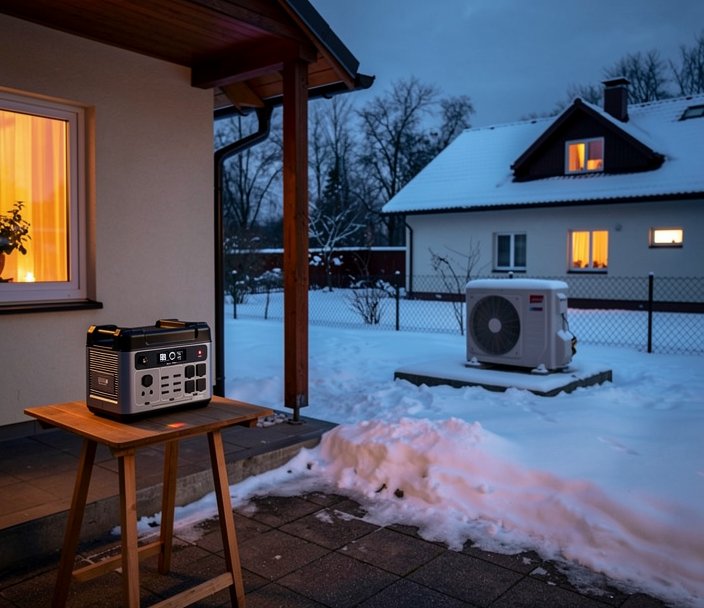
La neige est un autre risque silencieux. Une forte accumulation de neige contre la batterie peut bloquer les grilles de ventilation, piéger l'humidité et favoriser la condensation interne lorsque la batterie chauffe pendant la charge. Même un boîtier étanche à la poussière n'empêche pas la vapeur d'eau qui pénètre par la respiration induite par la température.
Pendant ce temps, une batterie de balcon montée en plein soleil l'après-midi sur une façade orientée au sud verra des températures de surface bien supérieures à l'air ambiant. Une batterie IP65 à boîtier métallique scellée peut devenir un four si elle n'a pas de refroidissement actif. C'est pourquoi les conceptions de refroidissement passif (sans ventilateur) doivent être combinées à une dissipation de chaleur suffisante et à une large plage de températures de fonctionnement.
L'IP65 peut-il supporter de fortes pluies et la neige ?
Oui, l'IP65 peut résister à de fortes pluies et aux éclaboussures, y compris la pluie poussée par le vent typique des tempêtes. L'accumulation de neige, cependant, nécessite de l'attention : vous devez dégager la neige autour de l'unité afin que le boîtier ne soit pas comprimé et que les évents ne soient pas bloqués. La condensation provenant de la fonte de la neige peut potentiellement passer à travers les joints s'ils se dégradent avec l'âge, il est donc conseillé de faire des vérifications visuelles régulières.
Pourquoi la plage de température de fonctionnement est aussi importante que l'indice IP
Même une batterie parfaitement étanche échouera si sa température interne dépasse la plage sûre pour ses cellules. Les batteries au lithium fer phosphate (LiFePO₄₄), la chimie dominante pour le stockage stationnaire, tolèrent généralement la charge uniquement au-dessus de 0 °C. En dessous, un placage de lithium peut se produire, endommageant définitivement les cellules. La décharge peut être autorisée jusqu'à environ -20 °C, mais la capacité utilisable chute fortement.
Une batterie de balcon qui doit fonctionner pendant un hiver allemand, où les températures nocturnes descendent régulièrement en dessous de -5 °C, nécessite une plage de charge qui s'étend en dessous de zéro—sinon le système de gestion de la batterie (BMS) refusera simplement de charger pendant les vagues de froid. Certains produits, comme l'OUKITEL EP2500, spécifient une plage de charge de 0 °C à 55 °C et une plage de décharge de -20 °C à 58 °C, ce qui couvre la grande majorité des climats européens. Une unité avec seulement une fenêtre de charge de 0 à 40 °C est beaucoup moins indulgente et peut vous laisser sans énergie stockée les jours les plus froids et les plus sombres—exactement quand vous en avez le plus besoin.
Côté chaleur, des températures supérieures à 45 °C à l'intérieur du boîtier accélèrent la dégradation de la capacité. La lumière directe du soleil sur un boîtier métallique peint en noir peut facilement pousser l'ambiance interne au-dessus de cette limite. Recherchez des batteries qui indiquent une tolérance à la décharge à haute température (≥55 °C) et qui utilisent soit un refroidissement actif, soit des dissipateurs passifs généreusement dimensionnés. L'OUKITEL EP2500, par exemple, repose sur un refroidissement passif et un fonctionnement quasi silencieux, mais sa large plage de températures rend le flux d'air forcé inutile sauf dans les environnements les plus extrêmes d'îlot de chaleur.
L'IP65 est-il suffisant ou ai-je besoin d'IP67/IP68 ?
Pour un balcon monté à au moins 30 cm au-dessus d'un sol qui draine bien, l'IP65 est suffisant. L'IP67 ou l'IP68 n'est nécessaire que si l'unité peut être submergée—par exemple, des balcons qui peuvent inonder après de fortes pluies. Si vous choisissez l'IP65, assurez-vous que le test de jet d'eau spécifié par le fabricant a été effectué sur l'ensemble complet, pas seulement sur le boîtier nu sans câbles attachés.
Niveaux de bruit et confort de vie : ce que signifient réellement les décibels
De nombreuses batteries de balcon utilisent des ventilateurs de refroidissement qui s'activent lorsque l'onduleur travaille dur. Dans un environnement urbain calme, un ventilateur peut être clairement audible à travers une fenêtre ouverte et peut déranger les voisins. En Allemagne, la TA Lärm (Technische Anleitung zum Schutz gegen Lärm) fixe des limites de bruit contraignantes pour les équipements fixes, en particulier la nuit. Ces limites sont définies comme une augmentation autorisée au-dessus du niveau de fond existant, donc le bruit permis dépend fortement de la tranquillité de l'environnement. Comme les niveaux de fond dans les zones résidentielles la nuit peuvent être très bas, même une augmentation modeste peut susciter des plaintes. Pour cette raison, si votre batterie est près d'une fenêtre de chambre, une conception sans ventilateur peut aider à éviter tout litige. Vérifiez toujours les seuils actuels de la TA Lärm et l'ordonnance locale sur le bruit avant l'installation.
Pour comparaison : 30 dB est un chuchotement, 40 dB est une bibliothèque calme, et 50 dB est une pluie modérée. Un ventilateur qui s'active quelques minutes toutes les heures à 45-50 dB est peu susceptible de violer les limites légales mais peut encore éroder la jouissance paisible. Les conceptions à refroidissement passif, qui n'ont pas de pièces mobiles, fonctionnent pratiquement en silence—un avantage majeur pour les installations de balcon. L'OUKITEL EP2500, par exemple, atteint sa plage de température sans ventilateur, le rendant effectivement inaudible.
Quel est le niveau sonore des systèmes de batterie de balcon ?
Les batteries de balcon refroidies par ventilateur émettent généralement 40-50 dB lorsque le ventilateur fonctionne, comparable au bourdonnement d'un réfrigérateur. Les unités à refroidissement passif sont essentiellement silencieuses. Si vous pouvez écouter une unité en fonctionnement avant l'achat, faites-le à courte distance (1 mètre). Vérifiez également les spécifications pour « niveau de bruit » ou « pression acoustique » ; les fabricants de systèmes vraiment silencieux sont généralement heureux de publier ce chiffre.
Comment vérifier les affirmations de protection du fabricant lors de l'achat
Un indice IP seul est facile à imprimer sur une étiquette. Pour éviter d'acheter une batterie qui échouera à l'extérieur, demandez :
- Le code IP complet et la norme de test. Une marque légitime devrait indiquer « IP65 selon IEC 60529 » ou citer les conditions de test spécifiques.
- Certification par un tiers. En Europe, recherchez des marques de TÜV, VDE ou d'autres organismes notifiés qui testent le produit complet, pas seulement le boîtier. Des certifications comme EN50549 et VDE4105 (sécurité de couplage au réseau) sont un bon signe que le fabricant soumet ses produits à des tests indépendants rigoureux. Pour plus d'informations, consultez notre guide sur la conformité de couplage au réseau pour le stockage de balcon.
- Extrêmes de température. Les spécifications doivent clairement indiquer les plages de température de charge et de décharge. Si une seule plage « de fonctionnement » est donnée, supposez qu'il s'agit de la plus étroite des deux.
- Résistance au brouillard salin. Les indices IP ne testent pas le brouillard salin corrosif. Si vous vivez à moins de 5 km d'une côte, demandez si le matériau du boîtier et les revêtements internes ont été validés pour les environnements marins. Certains fabricants offrent une déclaration distincte de résistance à la corrosion.
L'IP65 protège-t-il contre le brouillard salin dans les zones côtières ?
Non, les tests IP65 utilisent de l'eau douce. Le brouillard salin peut corroder les pièces métalliques et les joints avec le temps même si le boîtier reste étanche. Pour les installations côtières, recherchez des unités avec des revêtements résistants à la corrosion, du matériel en acier inoxydable, ou un résultat de test de brouillard salin spécifié (par exemple, ISO 9227). Demandez directement au fabricant avant d'acheter.
Une pratique trompeuse courante consiste à prétendre « étanche » sur la base d'un joint en silicone sans tester l'assemblage complet—y compris les presse-étoupes, les coutures de l'écran et les membranes de ventilation. Un contrôle rapide : si les photos du produit montrent des vis métalliques nues ou des charnières non peintes sur une unité extérieure, c'est un signal d'alarme.
L'expérience d'un autre résident souligne la valeur d'une vérification rigoureuse. À Rome, un propriétaire de balcon a sélectionné un système classé IP65 avec une plage de charge déclarée de 0 °C à 55 °C et une décharge jusqu'à -20 °C. Après deux ans de plein soleil, de grêle occasionnelle et de vents de sirocco poussiéreux en été, la batterie continue de fournir une capacité stable. Le détail clé : le propriétaire avait insisté pour voir le rapport de test TÜV et confirmé la certification EN50549 de l'unité avant l'achat.
Vos règles de décision : quand l'IP65 est suffisant—et quand il ne l'est pas
Si votre balcon est orienté au sud et cuit au soleil direct pendant plus de 4 heures par jour, choisissez une batterie avec une limite de température de décharge d'au moins 55 °C et un indice IP65 ou supérieur.
Si vous connaissez des températures hivernales inférieures à 0 °C pendant plus d'une semaine à la fois, sélectionnez un modèle dont la plage de charge s'étend explicitement jusqu'à 0 °C ou de préférence plus bas, et installez-le pour que la neige n'enterre pas le boîtier.
Si vous êtes à moins de 5 km d'une côte, vérifiez la résistance au brouillard salin avant d'acheter—l'IP65 seul ne suffit pas. Demandez la documentation du test de corrosion.
Si votre fenêtre de chambre est à moins de 3 mètres de l'emplacement de la batterie, optez pour une unité sans ventilateur, à refroidissement passif. Le son d'un ventilateur qui s'active sera perceptible, même s'il respecte les limites légales.
Dans tous les cas, demandez le certificat de test IP complet et demandez si l'indice s'applique au système complet avec tous les ports scellés, pas seulement au boîtier nu.
Cet article a été rédigé en utilisant des sources à jour en août 2026. Les détails peuvent changer avec le temps—vérifiez les spécificités actuelles avant de vous y fier.
Latest articles

OUKITEL Power Showcases Full-Scenario Energy Storage Solutions at the 140th Canton Fair
OUKITEL Power Brings Full-Scenario Energy Storage Solutions to Intersolar Middle East 2026 in Dubai
OUKITEL présente ses solutions de stockage d'énergie à Intersolar South America 2026, accélérant son expansion en Amérique latine
Le guide du propriétaire européen pour réduire sa facture de pompe à chaleur grâce au stockage d'énergie et aux tarifs intelligents
Dimensionner le solaire et la batterie pour une pompe à chaleur en hiver : guide pour climats froids en Europe (Allemagne, Suède, Ukraine)