C01
C01


Beste UPS voor thuis: Gids voor het kiezen van een ononderbreekbare stroomvoorziening
Stroomuitval is onvoorspelbaar. Of het nu gaat om een kort flikkeren tijdens een onweersbui of een urenlange black-out door instabiliteit van het net, het verliezen van elektriciteit kan betekenen: verloren werk, beschadigde gegevens, losgekoppelde beveiligingssystemen en bedorven voedsel. Als u op zoek bent naar de beste UPS voor thuis, wilt u waarschijnlijk een betrouwbare noodoplossing die uw essentiële elektronica blijft voeden wanneer het licht uitgaat. Maar de traditionele ononderbreekbare stroomvoorziening (UPS) die u zich van kantoor herinnert, is misschien niet langer de enige of beste optie.
Moderne draagbare powerstations zijn naar voren gekomen als een veelzijdig, krachtig alternatief voor conventionele UPS-apparaten. Ze bieden een langere looptijd, schonere stroom en de mogelijkheid om ze niet alleen als back-up te gebruiken, maar ook voor kamperen, roadtrips en off-grid werk. In deze uitgebreide gids leiden we u door alles wat u moet weten om de beste ononderbreekbare stroomvoorziening voor thuis te kiezen, met aandacht voor de belangrijkste factoren, aanbevelingen per gebruikssituatie en hoe OUKITEL's assortiment draagbare powerstations een slimmere, capabelere back-upoplossing biedt.

Wat is een thuis-UPS en waarom heeft u er een nodig?
Een thuis-UPS (ononderbreekbare stroomvoorziening) is een apparaat dat noodstroom levert wanneer uw hoofdvoeding uitvalt. In tegenstelling tot een generator schakelt een UPS bijna onmiddellijk in — meestal binnen milliseconden — zodat uw aangesloten apparatuur nooit zonder stroom komt te zitten. Traditionele UPS-apparaten zijn vaak kleine, zware dozen met loodaccu's die u net genoeg tijd geven om werk op te slaan en veilig af te sluiten. Voor huizen met meerdere apparaten — computers, netwerkapparatuur, beveiligingssystemen, apparaten — biedt een conventionele UPS echter mogelijk niet voldoende capaciteit of looptijd.
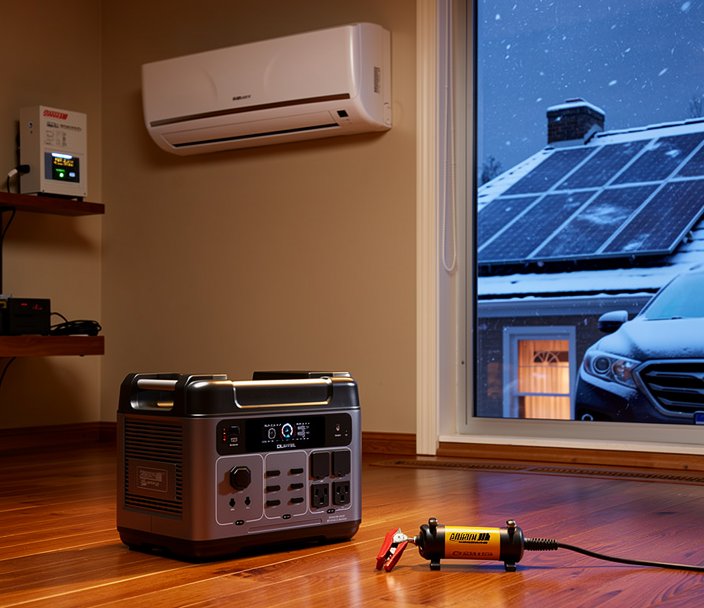
Daar komen draagbare powerstations in beeld. Deze moderne batterij-back-upsystemen gebruiken geavanceerde Lithium-ijzerfosfaat (LiFePO4)-chemie, bieden pure sinusgolf AC-uitgang en beschikken over EPS-schakeling (noodstroomvoorziening) onder 10 milliseconden. Dit betekent dat ze gevoelige elektronica net zo goed beschermen als een UPS, terwijl ze ook grotere apparaten urenlang van stroom kunnen voorzien, niet slechts minuten. Met functies zoals zonne-energie laden, uitbreidbare capaciteit en app-bediening zijn ze de beste UPS-batterijback-up voor thuis voor de moderne, verbonden huishoudens van vandaag.
Belangrijke factoren bij het kiezen van de beste UPS voor uw huis
Het selecteren van het beste UPS-systeem voor thuis vereist het evalueren van verschillende technische en praktische factoren. Dit is wat het meest belangrijk is:
- Capaciteit (Wh) en vermogen (W): Capaciteit bepaalt hoe lang uw apparaten werken; vermogen bepaalt wat u kunt aansluiten. Een typische thuiscomputeropstelling gebruikt ongeveer 150-300W, terwijl een koelkast 600-800W startvermogen kan gebruiken. De OUKITEL P800 (800W / 512Wh) is ideaal voor kleinere belastingen, terwijl de P5000 Pro (4000W / 5120Wh) essentiële apparaten in het hele huis aankan.
- Batterijchemie en levensduur: LiFePO4-batterijen bieden 4000+ cycli en een levensduur van 10 jaar — ver boven loodaccu's in UPS-apparaten, die doorgaans 3-5 jaar meegaan. Alle OUKITEL-modellen gebruiken LiFePO4, waardoor ze een investering voor de lange termijn zijn.
- Overschakeltijd: Voor gevoelige elektronica moet de overschakeltijd onder 10 milliseconden blijven om gegevensverlies of systeemherstart te voorkomen. OUKITEL-powerstations bieden EPS-schakeling bij <10ms, vergelijkbaar met speciale UPS-prestaties.
- Draagbaarheid en vormfactor: Als u uw back-up tussen kamers moet verplaatsen of mee naar buiten wilt nemen, is gewicht belangrijk. De P1000E Plus (12kg) en P2001 Plus (22kg) balanceren capaciteit met draagbaarheid.
- Laadsnelheid en -opties: Snel AC-laden, zonne-energie-ingang en dubbel laden (AC + zonne-energie) kunnen uw batterij in minder dan een uur opladen. De P2001 Pro laadt in slechts 40 minuten tot 80% op met dubbele ingang.
Beste UPS voor thuiscomputers & desktops
Uw thuiscomputer of werkstation is waarschijnlijk het meest kritieke apparaat om te beschermen. Een plotseling stroomverlies kan open bestanden beschadigen, het besturingssysteem aantasten en de levensduur van uw voeding verkorten. Voor een enkele desktop met een monitor en router biedt een unit met 800W uitgang zoals de OUKITEL P800 voldoende vermogen. De 512Wh-capaciteit kan een 200W-computersysteem meer dan twee uur van stroom voorzien, waardoor u ruim de tijd heeft om werk op te slaan en normaal af te sluiten. De pure sinusgolf-omvormer zorgt voor schone, stabiele stroom die gevoelige componenten niet beschadigt. Bovendien, met EPS-overschakeling onder 10ms, zal uw computer tijdens een stroomuitval geen knipperen merken.
Voor veeleisendere opstellingen — meerdere monitoren, een gaming-pc of een thuis server — stap over naar de OUKITEL P1000E Plus (1800W / 1024Wh). Deze kan piekbelastingen van 3600W aan, voldoende voor startpieken, en de vier AC-uitgangen stellen u in staat om uw tower, twee monitoren en een printer tegelijk aan te sluiten.
Beste UPS voor thuisnetwerk, routers & modems
Uw internetverbinding is de ruggengraat van thuiswerken, streaming en slimme thuisfunctionaliteit. Een router en modem verbruiken doorgaans slechts 10-30W samen, maar zelfs een korte stroomuitval kan uw netwerk resetten en een langdurige herstart vereisen. De beste UPS voor thuisnetwerk moet urenlang schone stroom leveren. Met de 512Wh-capaciteit van de OUKITEL P800 kunt u uw router en modem meer dan 20 uur laten draaien. Het lichte 6kg-ontwerp maakt het gemakkelijk om op een plank bij uw netwerkapparatuur te plaatsen. Als u een langere looptijd nodig heeft voor een volledig thuisnetwerk inclusief switches, access points en een NAS, overweeg dan de P1000E Plus of P2001 Plus. De P2001 Plus met 2048Wh kan een typisch thuisnetwerk meer dan drie dagen van stroom voorzien.
Beste UPS voor thuisbeveiligingssystemen
Beveiligingscamera's, deurbelcamera's, alarmpanelen en bewegingssensoren moeten ook tijdens een stroomuitval blijven werken — anders gaat de eerste verdedigingslinie van uw huis uit. Veel beveiligingssystemen verbruiken 50-100W, inclusief een DVR/NVR en meerdere camera's. De OUKITEL P1000E Plus (1024Wh) kan een typisch 60W-beveiligingssysteem 15-17 uur van stroom voorzien. Voor grotere opstellingen met PoE-switches en meerdere hoge-resolutiecamera's biedt de P2001 Pro (3200W / 2048Wh) drie keer zoveel looptijd. Alle OUKITEL-modellen produceren geen geluid en geen dampen, dus ze kunnen zonder zorgen binnenshuis worden geplaatst — in tegenstelling tot een benzinegenerator.
Beste UPS voor huishoudelijke apparaten & entertainmentsystemen
Tijdens een black-out wilt u misschien een koelkast laten draaien om voedsel te bewaren, een televisie van stroom voorzien voor nieuws of entertainment, of een ventilator laten draaien om koel te blijven. Deze apparaten hebben hogere vermogensvereisten. Een koelkast kan 600-800W verbruiken bij het starten en 100-200W tijdens het draaien. Hiervoor is de OUKITEL P2001 Plus (2400W / 2048Wh) een uitstekende keuze: deze kan een 150W-koelkast meer dan 13 uur laten draaien. Als u ook een tv (100W), een paar lampen (30W) en een ventilator (50W) van stroom wilt voorzien, biedt de P2001 Pro met 3200W uitgang en 2048Wh capaciteit u de flexibiliteit. Voor volledige thuisback-up die meerdere apparaten dekt, kan de P5000 Pro (4000W / 5120Wh) een koelkast, vriezer, putpomp en lampen tegelijk aan, dankzij de vijf AC-uitgangen en 8000W piekvermogen.
Beste draagbare & mini-UPS-oplossingen voor kleine ruimtes
Niet iedereen heeft een groot back-upsysteem nodig. Voor appartementen, studentenkamers of kleine thuiskantoren is een compacte oplossing ideaal. De OUKITEL P800 is extreem draagbaar met slechts 6kg en ongeveer zo groot als een kleine koelbox. Het is de beste mini-UPS voor thuis die u ook mee kunt nemen op een kampeertrip of kunt gebruiken als dagelijkse stroombron op een bureau. De P1000E Plus is slechts 12kg — nog steeds hanteerbaar voor één persoon — en voegt 1024Wh capaciteit en twee extra AC-uitgangen toe. Beide modellen hebben LED-verlichting voor noodverlichting, en de 3W-LED van de P800 biedt praktische basisverlichting tijdens een stroomuitval.
Inzicht in UPS-batterijkosten & dubbele batterijopties
Een van de grootste verborgen kosten van traditionele UPS-systemen is batterijvervanging. Loodaccu's moeten elke 2-4 jaar worden vervangen, en de kosten kunnen na verloop van tijd gelijk zijn aan de oorspronkelijke unit. OUKITEL's LiFePO4-batterijen gaan 10 jaar mee met 4000+ cycli, dus u heeft geen nieuwe batterij nodig gedurende de levensduur van het product. Geen doorlopende kosten voor batterijwissels.
Als u meer capaciteit nodig heeft dan één unit biedt, overweeg dan uitbreiding. De OUKITEL BP3000 is een uitbreidingsaccu met 2048Wh capaciteit die kan worden gekoppeld met compatibele powerstations (tot 7 units voor 16.38kWh totaal). Dit geeft u effectief een dubbele batterij — of zelfs een zesvoudige batterij — systeem dat meeschaalt met uw behoeften. Bijvoorbeeld, het combineren van een P2001 Pro met één BP3000 geeft u 4096Wh — genoeg om een koelkast een hele dag te laten draaien.
Conclusie
Het kiezen van de beste UPS voor thuis in 2026 betekent verder kijken dan traditionele batterij-back-ups. OUKITEL's draagbare powerstations combineren de onmiddellijke overschakelbescherming van een UPS met de lange looptijd, schone stroom en veelzijdigheid van een modern energiesysteem. Of u nu een enkele computer wilt beschermen, uw thuisnetwerk van stroom wilt voorzien, uw beveiligingssysteem wilt beveiligen of essentiële apparaten wilt laten draaien, er is een OUKITEL-oplossing voor u. Met LiFePO4-batterijen die tien jaar meegaan, ultrasnel laden en EPS onder 10ms, koopt u niet alleen een back-up — u investeert in gemoedsrust.
Veelgestelde vragen
Wat is de beste UPS voor een thuiscomputeropstelling?
Voor een typische thuiscomputer met een monitor en router biedt de OUKITEL P800 (800W / 512Wh) meer dan twee uur looptijd en pure sinusgolfstroom. Voor meerdere monitoren of een gaming-pc wordt de OUKITEL P1000E Plus (1800W / 1024Wh) aanbevolen.
Kan een draagbaar powerstation een traditionele UPS voor thuisgebruik vervangen?
Ja. OUKITEL draagbare powerstations hebben een EPS-overschakeling onder 10 milliseconden, vergelijkbaar met de prestaties van een speciale UPS. Ze bieden ook grotere capaciteiten, een langere batterijlevensduur (10 jaar) en de mogelijkheid om op te laden via zonne-energie — waardoor ze een superieure keuze zijn voor de meeste thuisback-upscenario's.
Welk formaat UPS heb ik nodig voor mijn thuisnetwerk en router?
Een router en modem verbruiken doorgaans 10-30W. De OUKITEL P800 (512Wh) kan zo'n belasting meer dan 20 uur van stroom voorzien. Als u meerdere switches of een NAS heeft, zorgt een grotere unit zoals de P1000E Plus voor meerdere dagen back-up.
Hoe lang gaat een thuis-UPS-batterij mee tijdens een stroomuitval?
Dat hangt af van de belasting en capaciteit. Een 1024Wh-unit zoals de P1000E Plus kan een 100W-belasting ongeveer 10 uur laten draaien. Modellen met een hogere capaciteit zoals de P5000 Pro (5120Wh) kunnen een 600W-koelkast meer dan 8 uur laten draaien. OUKITEL LiFePO4-batterijen behouden hoge capaciteit gedurende duizenden cycli.
Wat zijn de typische kosten van een UPS-batterij voor thuisgebruik?
Traditionele UPS-loodaccu's kosten €50-€200 en moeten elke 2-4 jaar worden vervangen. OUKITEL's LiFePO4-batterijen zijn ingebouwd in de unit en gaan 10 jaar mee — geen vervanging nodig. De initiële kosten zijn hoger, maar de totale eigendomskosten zijn over een decennium lager.
Latest articles
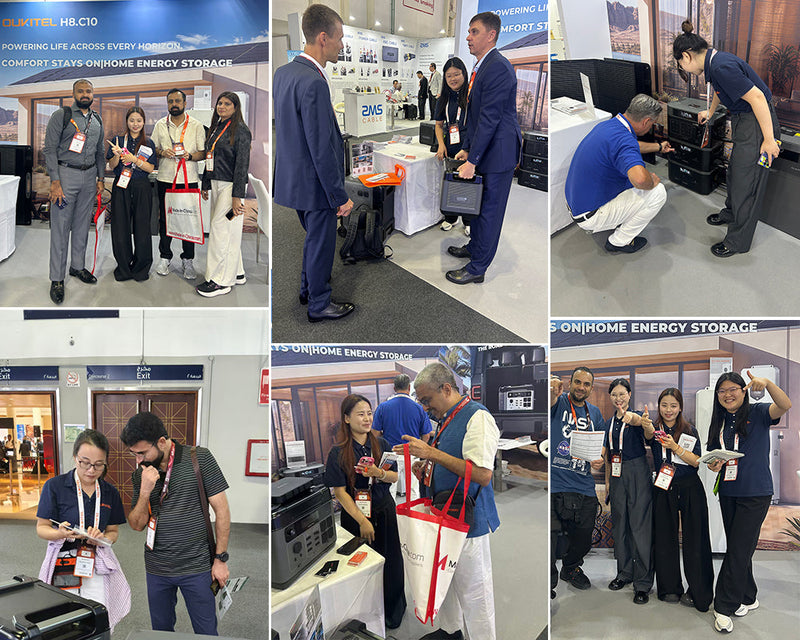
OUKITEL Power Brings Full-Scenario Energy Storage Solutions to Intersolar Middle East 2026 in Dubai
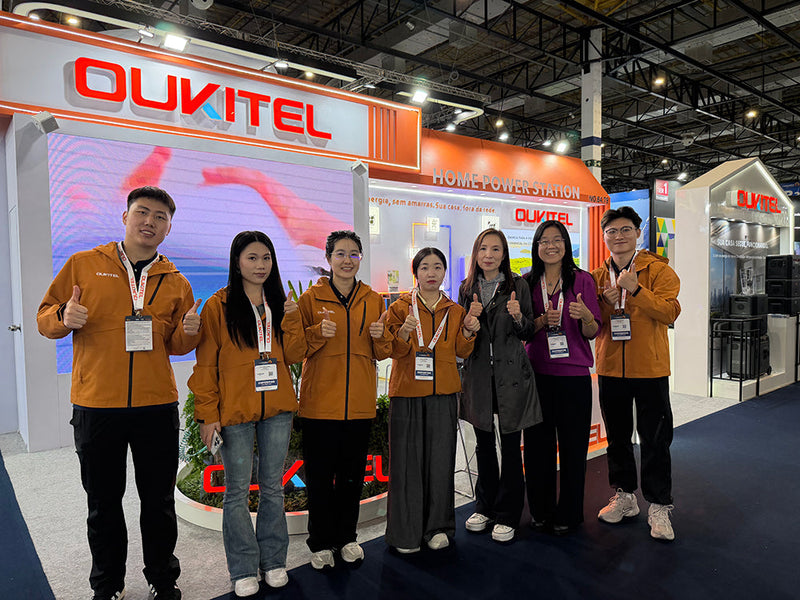
OUKITEL toont energieopslagoplossingen op Intersolar South America 2026 en versnelt uitbreiding naar Latijns-Amerika
De Europese huiseigenaarsgids om warmtepomprekeningen te verlagen met thuisbatterijen en slimme tarieven
Zonnepanelen en batterij dimensioneren voor een winterwarmtepomp: een koude-klimaatgids voor Europa (Duitsland, Zweden, Oekraïne)
Overlevingsgids voor warmtepompen bij stroomuitval: uw batterij rekken tijdens meerdaagse winteruitval