C01
C01


Draagbare balkonbatterij: veelzijdig gebruik voor thuisback-up, kamperen en noodstroom in de camper
Balkonzonne-energieopslag is niet langer alleen een vast apparaat aan de muur van een appartement. Veel huiseigenaren, camperbezitters en incidentele kampeerders hebben één vraag: kan één batterij echt dienen voor mijn balkon, mijn noodstroom en mijn weekenduitstapjes naar het bos? Het antwoord is noch een simpel ja, noch nee—het hangt af van welke compromissen je bereid bent te accepteren. Deze gids evalueert de praktische beperkingen van een draagbare balkonbatterij voor meerdere toepassingen, met specifieke aandacht voor gewicht, capaciteit, duurzaamheid en regelgeving die een echte hybride onderscheiden van een apparaat met één functie.

Vaste balkonopslag versus draagbare systemen: waar elk het beste werkt
Voordat je kiest voor één batterij voor alles, is het belangrijk om de kernverschillen te begrijpen tussen speciale vaste systemen en de opkomende categorie draagbare balkonbatterijen.
Een pure vaste balkonopslag is meestal geïntegreerd in de elektrische infrastructuur van een gebouw. Het heeft vaak geen handvat, weegt meer dan 40 kg en is ontworpen om nooit verplaatst te worden. Deze systemen blinken uit in dagelijkse zelfconsumptie van zonne-energie en piekscheren, en ondersteunen vaak apparaten met hoog vermogen tijdens een stroomuitval, maar ze bieden geen mobiliteit.
Een draagbare powerstation—de bekende kampeerpartner—is gebouwd voor frequent transport. Met een gewicht van 7–20 kg kan het door één persoon worden opgetild en heeft het vaak meerdere DC- en AC-aansluitingen. Het ondersteunt echter zelden netinjectie of permanente balkonbedrading; de hoofdtaak is off-grid AC-uitvoer.
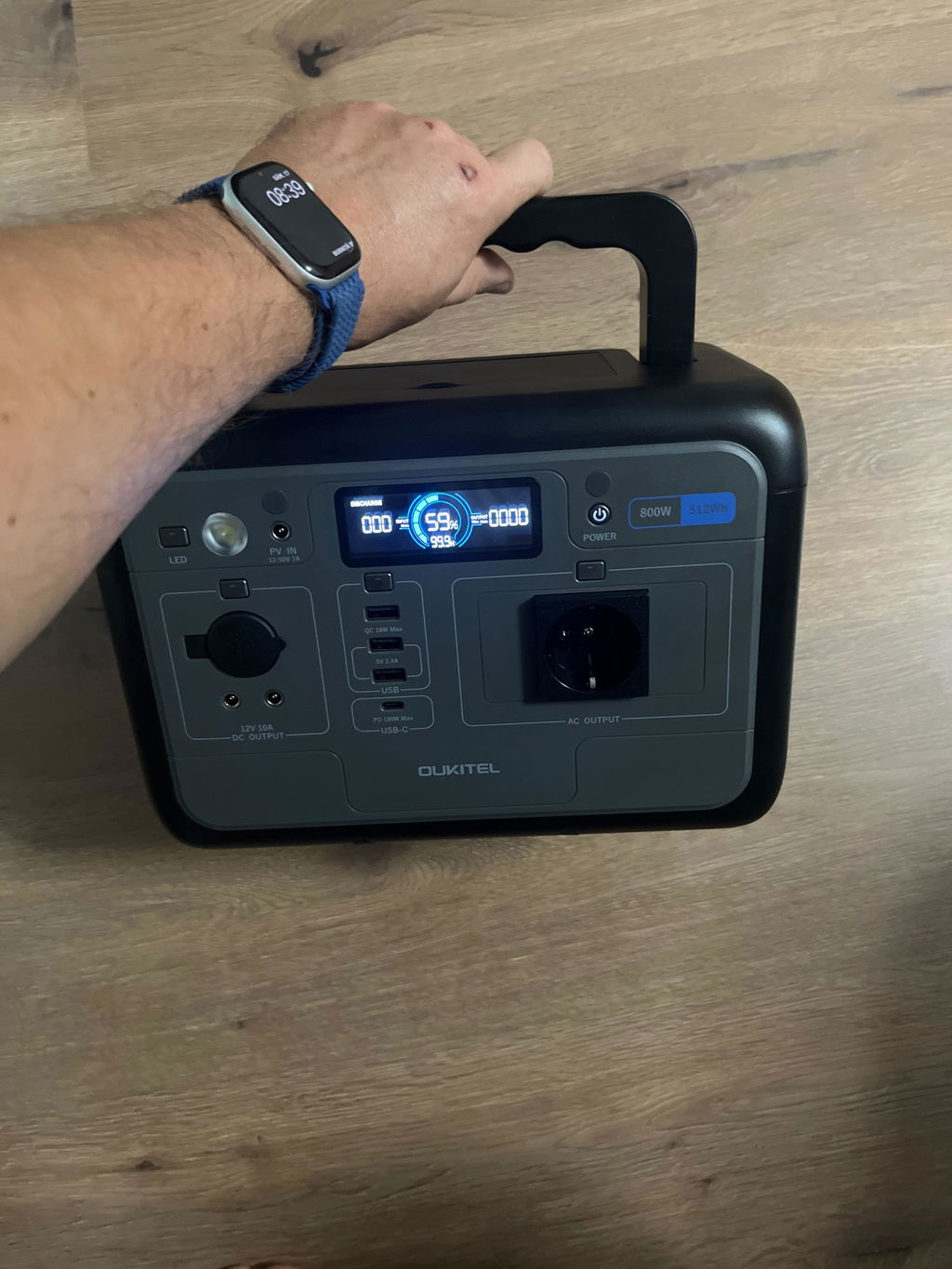
Balkonbatterijen voor meerdere toepassingen zitten er tussenin. Ze zijn fysiek zwaarder dan een typisch draagbaar station, maar nog steeds verplaatsbaar door één of twee personen. Een representatief voorbeeld is de OUKITEL EP2500, die een 2048 Wh Lithium-ijzerfosfaat (LiFePO4)-batterij, een 2500 W pure sinusomvormer en een 4000 W zonne-ingang over vier MPPT-kanalen in een 27,2 kg chassis met IP65-classificatie combineert. In tegenstelling tot een kampeer-only powerstation kan het overtollige zonne-energie legaal terugleveren aan het huisnet (tot 2500 W) via grid-tie-functionaliteit, en het 51,2 V industriële systeem kan worden uitgebreid tot 16 384 Wh met maximaal zeven batterij-uitbreidingspakketten. Tegelijkertijd is het niet zo gemakkelijk om in de achterbak van een auto te gooien als een 10 kg kampeerstation.
Waar past elk systeem? Een vast systeem dient een permanente energierol; een lichtgewicht draagbaar station dient frequente buitentrips. Een balkonbatterij voor meerdere toepassingen is de keuze wanneer je zonnepanelen op je balkon of dak hebt en je die energie wilt gebruiken om je huis van stroom te voorzien, en dan af en toe de batterij wilt loskoppelen en meenemen naar de camping of camper.
Op dit punt vraag je je misschien af: Wat is het verschil tussen een draagbare powerstation en een balkonbatterij? Het onderscheid gaat niet alleen over een handvat. Een balkonbatterij zoals de EP2500 is gecertificeerd voor grid-tie-werking (EN50549, VDE4105) en heeft anti-eilandbeveiliging binnen 10 ms, wat een typisch kampeerstation niet biedt. Het gebruikt ook een hogere DC-busspanning (51,2 V) en ondersteunt enorme zonne-ingang—iets dat irrelevant is voor een weekendkampeerder, maar essentieel voor een huishouden dat overdag belasting wil compenseren met een 4000 W zonnepaneelopstelling. Als je doel is om de energierekening te verlagen terwijl je de deur openhoudt voor incidenteel off-grid gebruik, dan maakt dat onderscheid uit.
Wat maakt een product echt '3-in-1': balkon + buiten + noodstroom
Drie verschillende gebruikssituaties vereisen drie overlappende maar soms conflicterende specificaties:
- Balkonzonne-energieopslag: grid-tie-mogelijkheid, hoge zonne-ingang, uitbreidbaarheid, stille werking en een IP-classificatie voor weerbestendige buiteninstallatie.
- Noodstroom voor thuis: hoog AC-vermogen (minimaal 2000 W), voldoende capaciteit om een koelkast en verlichting urenlang van stroom te voorzien, en een snelle omschakeling bij gebruik van EPS (de ≤10 ms omschakeltijd van de EP2500 voldoet).
- Kamperen / camper: hanteerbaar gewicht, meerdere laadmogelijkheden (zonne-energie, AC, auto-alternator via adapter), breed bedrijfstemperatuurbereik en weerbestendigheid die dauw, motregen en stoffige paden overleeft.
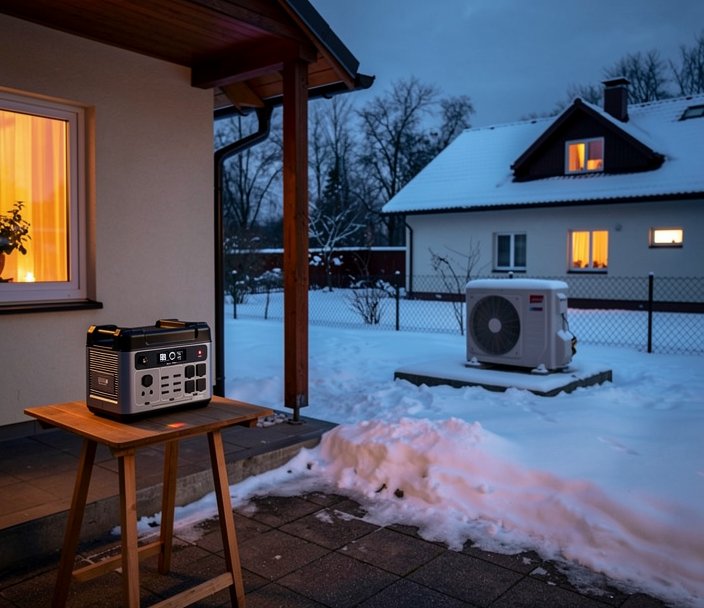
Als we een product als de EP2500 door deze lens bekijken, is de checklist grotendeels groen: IP65-waterdichtheid betekent dat het in regen en sneeuw op een balkon kan staan (waterdichtheid van balkonopslag legt de IP65-standaard in detail uit), het ontladingsbereik van −20 °C tot 58 °C is bestand tegen koude bergochtenden en hete campermiddagen, en de passieve koeling blijft stil genoeg voor het leven in een appartement. De uitbreidbare accu's stellen je in staat om te starten met 2 kWh en later op te schalen naar 16 kWh—een flexibiliteit die speciale draagbare stations zelden bieden (uitbreidbare accusystemen kunnen de kostenvergelijking drastisch veranderen).
Voor/na-vergelijking: Stel dat een huurder in een stadsappartement een traditioneel vast balkonzonnesysteem zonder opslag had geïnstalleerd, en overtollige energie terugleverde aan het net voor een kleine terugleververgoeding. Bij stroomuitval bleef het appartement donker omdat de omvormer uitschakelde (anti-eilandbeveiliging). Later vervingen ze de installatie zonder omvormer door een grid-tie-balkonbatterijsysteem en voegden ze één batterij-uitbreidingspakket toe—nu laden dezelfde panelen de batterij, en tijdens een stroomuitval houdt de EPS-aansluiting de koelkast en de Wi-Fi-router in leven. In een lang weekend maken ze de hoofdeenheid los, laden die in de auto en voeden een koffiezetapparaat op de camping. Voor: geen back-up, geen draagbaarheid. Na: energiebestendigheid thuis en een stille camping, ten koste van 27 kg per verplaatsing.
Dat voor/na-scenario benadrukt de centrale afweging: het apparaat voor meerdere toepassingen werkt wanneer mobiliteit incidenteel is en de thuisintegratiefuncties de belangrijkste reden zijn om te kopen. Als je de batterij elke vrijdag een wenteltrap op moet dragen, werkt dit ontwerp niet.
Gewichts- en draagbaarheidsafwegingen bij mobiel gebruik
Je denkt nu misschien: Is het praktisch om een balkonopslagsysteem te verplaatsen? Het eerlijke antwoord hangt af van je fysieke situatie en hoe vaak je het verplaatst.
Het gewicht van 27,2 kg van de EP2500 is niet rugvriendelijk voor één persoon over lange afstanden. Vergelijk dat met een typisch 1 kWh kampeerstation van 10–12 kg, en het verschil is duidelijk. Toch heeft de balkonbatterij een kern van 2048 Wh—ongeveer twee keer zoveel energie als die kleinere units—plus een volwaardige omvormer en grid-tie-circuits. Die extra massa is de prijs voor veelzijdigheid.
Voorbeeld van een mislukking: Een camperbezitter kocht een grote balkonbatterij voor meerdere toepassingen, met de bedoeling deze zowel thuis als in de camper te gebruiken. De unit werd in het achterste opbergvak van de camper geplaatst, maar elke keer dat ze hem eruit moesten schuiven om op de grond te laden met zonne-energie, zorgden het gewicht en de onhandige vorm voor spanning. Binnen zes maanden bleef de batterij in de garage staan, en uiteindelijk kochten ze een lichtgewicht draagbaar station voor de camper—waardoor de totale kosten verdubbelden. Dit illustreert de valkuil: gewicht dat in een specificatielijst beheersbaar lijkt, kan in het dagelijks leven een obstakel worden.
Praktische regels voor mobiel gebruik:
- Als je balkonbatterij meestal op één plek blijft en je hem slechts een paar keer per jaar meeneemt kamperen, is het gewicht van 27 kg draaglijk—gebruik een opvouwbare kar of een tweede persoon.
- Als je de batterij wekelijks wilt verplaatsen (bijv. camperreizen, verplaatsen tussen garage en auto), zoek dan een lichter speciaal draagbaar station, of accepteer dat je een permanent in de camper gemonteerde batterij en een apart thuisssysteem nodig hebt.
- Gewichtsdrempels: de meeste gezonde volwassenen kunnen 27 kg voor een korte afstand tillen, maar trappen, modderige grond en eenhandig gebruik maken het onveilig. Plan altijd de tilroute voordat je koopt.
Camper en kamperen: praktische overwegingen voor mobiel batterijgebruik
Wanneer een batterij het balkon verlaat en op een camping of in een camper aankomt, verandert de werkomgeving. Veiligheidsmaatregelen moeten verschuiven van plug-and-forget naar actief veldbewustzijn.
Weer en fysieke plaatsing: IP65 is uitstekend voor regenspatten en balkonblootstelling, maar het betekent niet dat de unit in een plas kan staan of ondergedompeld kan worden. Op modderige grond plaats je hem op een plank of in een droge tas. In directe middagzon, zelfs binnen het ontladingsbereik van −20 °C tot 58 °C, kan het batterijbeheersysteem het laden verminderen als de interne temperatuur stijgt; schaduw is je vriend. De IP65-classificatie betekent ook dat het bestand is tegen stof—cruciaal bij kamperen in droge, stoffige gebieden.
Laden onderweg: De vier MPPT-zonne-ingangen (elk tot 1000 W, 12–60 V, 28 A) maken flexibele paneelopstellingen mogelijk. Voor een typisch camperdak kan een set van 400 W panelen een constante lading leveren, en de 98% zonne-omzettingsefficiëntie helpt wanneer het daglicht kort is. Merk echter op dat de maximale zonne-ingangsspanning 60 V per kanaal is—de meeste grote residentiële panelen overschrijden dat in serie geschakeld, dus je moet panelen op de juiste manier parallel aansluiten. Voor het laden via een alternator is een aparte 12 V-naar-60 V boostlader vereist; de EP2500 heeft geen DC-ingang, alleen AC en zonne-energie. Dat is een ontwerpkeuze die onhandig kan zijn voor lange camperritten.
Gevoelige camperapparatuur van stroom voorzien: De pure sinusomvormer (230 V, 50/60 Hz) kan veilig magnetrons, medische apparaten en inductiekookplaten laten werken. De enkele AC 230 V-aansluiting betekent echter dat je mogelijk een stekkerdoos nodig hebt; kies er een die geschikt is voor buitengebruik en vermijd het tegelijkertijd aansluiten van apparaten met hoog vermogen in serie.
Veiligheidspraktijken in het veld om een veelvoorkomende fout te voorkomen: Een gebruiker zette ooit een batterij voor meerdere toepassingen in een tent op, en liet 's nachts een kleine kachel draaien. De kachel trok bijna de limiet van 2500 W van de batterij, en de beperkte ruimte zorgde ervoor dat de batterij opwarmde. Hoewel de oververhittingsbeveiliging uiteindelijk uitschakelde, verminderde de herhaalde stress de bruikbare capaciteit van de batterij gedurende het seizoen. De les: zorg altijd voor luchtcirculatie rond de unit en laat hem nooit urenlang op maximaal continu vermogen draaien in een beperkte, hete ruimte. In een camper plaats je de unit in een geventileerd compartiment, niet naast de kachel.
Eén apparaat voor alles versus aparte speciale units: hoe te beslissen
De laatste vraag komt terug op: Moet ik één apparaat voor alles kopen of aparte units? En het antwoord is een reeks als-dan-regels op basis van jouw specifieke mobiliteit, budget en energiebehoeften.
Laten we dit als een scenario-budgetmatrix en een eenvoudige beslissingsstroom bekijken:
| Jouw situatie | Frequentie van draagbaarheid | Thuisintegratie nodig? | Aanbevolen aanpak | Geschat budget (EUR, actueel) |
|---|---|---|---|---|
| Licht: incidentele kampeerder, balkon met zonnepanelen, back-up nodig | 1–2 keer/maand | Ja | Balkonbatterij voor meerdere toepassingen (bijv. 2 kWh uitbreidbaar) | €1 200–€1 800 |
| Gemiddeld: camperreizen om de paar weken, thuisback-up secundair | Wekelijks | Nee | Speciaal draagbaar powerstation (1,5–2 kWh) + aparte kleine balkonbatterij | €1 000–€2 000 totaal |
| Zwaar: fulltime camperleven of frequent kamperen, grid-tie op parkeerplaats thuis | Dagelijks | Optioneel | Ingebouwd lithiumsysteem in camper + grote vaste thuisopslag | €3 000+ |
| Appartementshuurder, geen camper, wil alleen rekeningverlaging en incidentele back-up | Nooit (of alleen bij verhuizing) | Ja | Vaste balkonopslag aan de muur (niet-draagbaar) | €800–€1 500 |
Pas nu een als-dan-denkmodel toe:
- Als je een balkonzonnepaneelopstelling hebt en je het dagelijkse netverbruik wilt verminderen en je kampeert minder dan vier keer per jaar, dan geeft een balkonbatterij voor meerdere toepassingen zoals de EP2500 je grid-tie-besparingen op de energierekening en incidentele off-grid stroom zonder twee apparaten nodig te hebben.
- Als je maandelijks kampeert of een camper gebruikt, dan zal het herhaaldelijk tillen van 27 kg als een karwei voelen; scheid een lichter draagbaar station voor de camper en een eenvoudige grid-tie-omvormer voor het balkon. De extra initiële kosten kunnen worden gecompenseerd door letsel of een verspilde aankoop te voorkomen.
- Als de regels van je appartement vaste installaties beperken, dan is een draagbare balkonbatterij die op een stopcontact wordt aangesloten (balkonzonnesysteem) een van de weinige legale manieren om zonne-energieopslag in te zetten, en wordt de draagbaarheid een bonus, geen last.
- Als je back-up voor het hele huis nodig hebt tijdens langdurige stroomuitval en je het budget hebt, dan is de uitbreidbare architectuur (tot 16 kWh) van een systeem zoals de EP2500 logisch—je kunt klein beginnen en in de loop van de tijd batterijpakketten toevoegen. De thuisbatterij noodstroom-collectie illustreert hoe capaciteitsuitbreiding werkt.
Randgevallen waar de standaardregels niet gelden
Sommige omstandigheden draaien de aanbeveling volledig om:
- Fysieke beperking of gebrek aan hulp: Als je 27 kg niet kunt tillen, zelfs niet met hulp, is elke batterij voor meerdere toepassingen onpraktisch voor mobiel gebruik. Kies voor een vast systeem en een apart ultra-licht draagbaar station.
- Kamperen bij extreme kou: De ontladingstemperatuurlimiet van de EP2500 is −20 °C, maar laden is alleen gespecificeerd tot 0 °C. Als je vaak kampeert bij temperaturen onder het vriespunt, heb je een geïsoleerde behuizing met een batterijverwarming nodig, of moet je vertrouwen op een batterij die van nature lage-temperatuurladen ondersteunt (zeldzaam op dit vermogensniveau). De balkonbatterij voor meerdere toepassingen, voornamelijk ontworpen voor residentieel gebruik, kan teleurstellen in een Finse wintertent tenzij je hem binnen een verwarmde ruimte houdt.
- Geluidsgevoeligheid off-grid: Hoewel de unit passief gekoeld en bijna stil is, produceert de omvormer een zwak gezoem bij volledige belasting. De meeste kampeerders zullen het niet merken, maar als je absolute stilte nodig hebt voor natuurregistratie, controleer dan het geluidsniveau van het specifieke model.
- Grid-tie-afwijzing: Sommige lokale netbeheerders kunnen aanvullende certificeringen vereisen naast EN50549/VDE4105 voordat een balkonbatterij mag terugleveren. Controleer de huidige voorwaarden op de officiële website van de netbeheerder of toezichthouder. Het artikel over grid-tie-naleving legt EN50549 en VDE4105 in detail uit.
Praktische beslissingsregels samengevat
Bij het evalueren of een draagbare balkonbatterij past bij jouw leven met meerdere toepassingen, pas je deze concrete als-dan-filters toe:
- Als grid-tie-zonnebesparing je primaire doel is en buitentrips zeldzaam zijn, dan geef je prioriteit aan een conform, uitbreidbaar balkonsysteem met de hoogst mogelijke zonne-ingang.
- Als je één apparaat nodig hebt dat je af en toe kunt verplaatsen en toch legaal energie terug kunt leveren aan het appartementcircuit, dan kies je een unit voor meerdere toepassingen met EN50549/VDE4105-certificering en een IP65-classificatie, en accepteer je het gewicht van 27 kg als de prijs voor flexibiliteit.
- Als je de batterij elke week verplaatst of kampeert in veeleisende omgevingen, dan koop je een speciaal lichtgewicht draagbaar powerstation voor de camper en een eenvoudigere grid-tie-omvormer voor het balkon—probeer niet één apparaat beide taken te laten doen, anders eindig je waarschijnlijk met een 27 kg zware presse-papier in de garage.
- Als toekomstige uitbreiding belangrijk is, dan is een uitbreidbare architectuur een slimmere langetermijninvestering dan een verzegeld draagbaar station, zelfs als de basisunit in eerste instantie meer kost.
Geen enkele batterij kan overal in uitblinken, maar een eerlijke blik op je mobiliteit, gebruiksfrequentie en elektrische regelgeving kan voorkomen dat je te veel—of te weinig—uitgeeft aan een apparaat dat uiteindelijk ongebruikt blijft.
Dit artikel is geschreven met actuele bronnen van augustus 2026. Details kunnen in de loop van de tijd veranderen—controleer de huidige specificaties voordat je erop vertrouwt.
Latest articles
OUKITEL Power Showcases Full-Scenario Energy Storage Solutions at the 140th Canton Fair
OUKITEL Power Brings Full-Scenario Energy Storage Solutions to Intersolar Middle East 2026 in Dubai
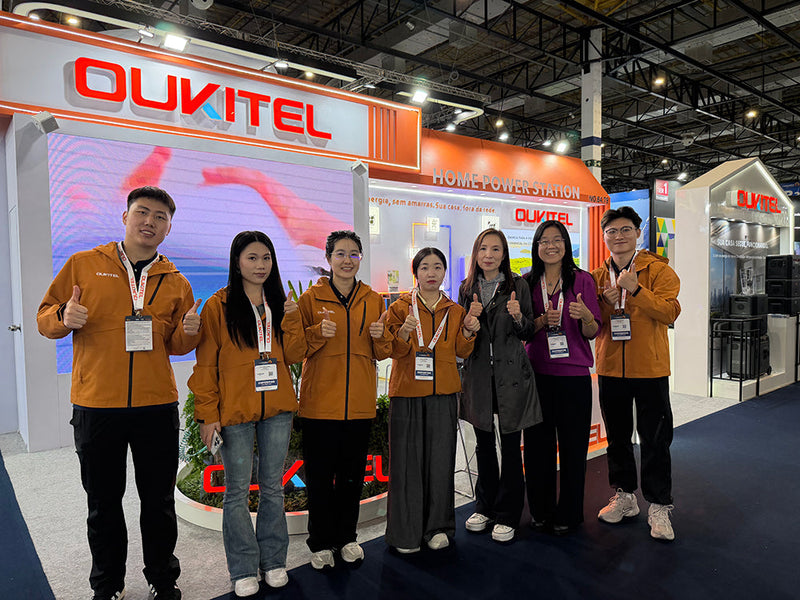
OUKITEL toont energieopslagoplossingen op Intersolar South America 2026 en versnelt uitbreiding naar Latijns-Amerika
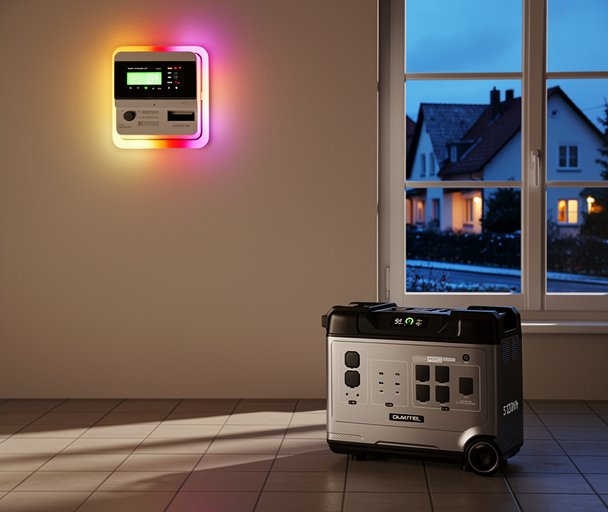
De Europese huiseigenaarsgids om warmtepomprekeningen te verlagen met thuisbatterijen en slimme tarieven
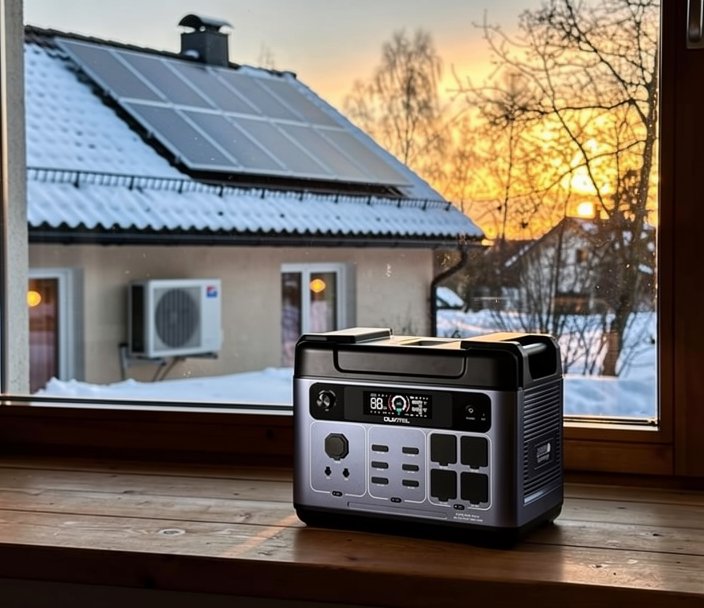
Zonnepanelen en batterij dimensioneren voor een winterwarmtepomp: een koude-klimaatgids voor Europa (Duitsland, Zweden, Oekraïne)