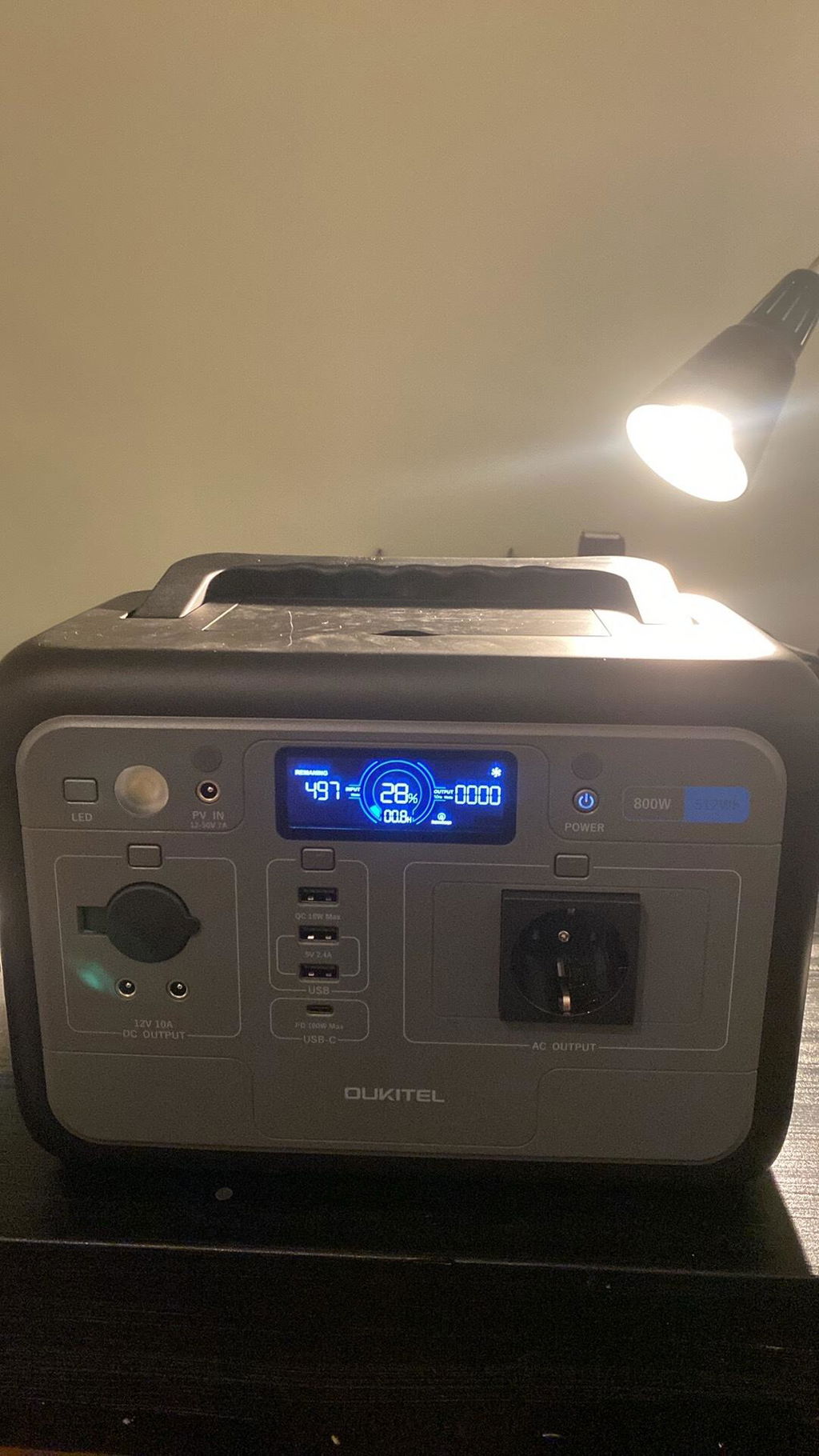
C01


From Checkout to First Power-Up: EU Costs, Sales Channels, Returns and Warranty for Black Friday Power Station Orders
The short version: buy from a seller established in your own EU country, pay in euros with a method that produces a written receipt, open the parcel on camera, and put the unit under a real load inside the 14-day withdrawal window. That route costs a little more than the cheapest cross-border listing and removes almost every after-sales risk described below. The rest of this guide explains why that rule holds, where it breaks down, and what actually happens between the payment page and the first time you plug something in.
One clarification first, because it changes everything that follows: a portable power station is not a phone power bank. A unit in the 1 kWh class and above is a lithium battery system with its own transport restrictions, its own returns handling and, in the EU, its own regulatory obligations. Black Friday listings that treat a 12 kg power station like a 20,000 mAh phone accessory are a reliable warning sign.

Hidden Costs After Checkout: What EU Buyers Actually Pay
Black Friday pricing is engineered to make the headline number the only number you look at. The delivered cost is a different figure, and it is assembled from four parts: the unit price, the tax and duty treatment of the shipment, the delivery method, and the accessories you will almost certainly need. Only the first of those is usually on the banner.
Tax and duty. There is no single EU-wide rule you can apply to every cross-border order, because the treatment depends on the destination country, how the goods are classified and where the seller is established. What matters practically is whether the listing is sold on a delivered-duty-paid basis. If the product page does not state clearly that VAT and any import charges are included, assume they are not, and ask the seller in writing before you pay. A carrier invoice arriving a fortnight after delivery is the most common post-Black-Friday surprise in this category.
Delivery method. Weight decides this. A 12 kg unit travels as a normal parcel. A 22 kg unit is at the edge of parcel handling. A 52.5 kg unit such as the P5000E PLUS is freight: it may arrive on a pallet, kerbside, during a weekday slot, and the driver will not carry it up two flights of stairs. If you live in a walk-up flat, that is a real cost — either a paid two-person delivery or a favour you will need to call in.
The accessory you forgot. Solar input ratings are meaningless without a panel that matches. The P1000 PLUS accepts up to 500 W of solar, the P2001 Plus also 500 W, the P5000E PLUS up to 1,000 W through a 12–60 V/20 A XT60 input, and the BP3000 up to 1,000 W. Budget the panel as part of the purchase rather than as a spring upgrade — a winter purchase with no panel means the unit only ever charges from the mains until March.
Your own return exposure. Under the EU distance-selling rules, the trader may require you to bear the direct cost of returning the goods, provided you were told this before you ordered. On a compact unit that is a courier fee. On a 52.5 kg station it is a pallet. Check the pre-contract information before checkout, not after.
If a card issued in a different currency is involved, the issuer will normally add a conversion margin on top of the listed price. Paying in the seller’s euro price is almost always cheaper than letting the card network convert for you.
Sales Channels Compared: Official Stores vs Marketplaces vs Local Retailers
The channel you choose determines who is legally on the hook when something goes wrong — far more than the brand name on the box. A marketplace listing may show a familiar product photo while the seller of record is a third party with no EU returns address. That distinction only becomes visible when you need it.
| Channel | Who your contract is with | Delivery and returns reality | Best for |
|---|---|---|---|
| Brand’s own EU store | The manufacturer’s EU entity | Consistent spec sheets; returns usually by collection or prepaid label; support in the brand’s languages rather than yours | Buying a specific model with a documented warranty path |
| Large marketplace | Whichever third-party seller holds the buy box | Fast delivery, platform-mediated disputes, but return address and warranty handler vary by seller | Price comparison, buying when the seller is clearly identified and EU-established |
| National or regional retailer | A company established in your country | Local returns desk, local consumer authority as backstop, slower delivery, narrower range | Heavy units, first-time buyers, anyone who wants to hand the problem to a person |
The pattern that matters: the heavier and more expensive the unit, the more the channel outweighs the price difference. Saving a small percentage on a 52.5 kg station and then discovering the return address is in another continent is a false economy. A fast shipping and clean return policy on the retailer’s own page is worth more than a marginally lower headline figure.
Three shopper scenarios, three different answers
Scenario A — the city flat with a balcony. Constraints: floor space, a wet maritime winter, no lift, and a need to move the unit indoors between uses. The critical specs are footprint and weight, not capacity. Something around 34.6 × 22.8 × 23.8 cm at 12 kg is manageable on a shelf; a 52.5 kg unit is not, even with wheels, if there are stairs involved. Here the channel question is simple: buy from a seller who will collect a return, because you cannot easily ship a battery back yourself.
Scenario B — the caravan with a fixed departure date. Constraints: a hard deadline, motor-start surges, and limited storage. The risk here is not price but timing. A Black Friday order that ships in three weeks may miss a December trip. Order from a channel that quotes a delivery window, not a dispatch estimate, and pay attention to surge ratings: a fridge compressor or a pump can draw multiples of its running wattage for a second.
Scenario C — the house with a well pump and multi-day outages. Constraints: duration, continuous draw, and the physical problem of moving the thing. This is the buyer for whom warranty handling matters most, because the unit is doing real work and any failure is an emergency rather than an inconvenience. Buy locally, register the warranty the day it arrives, and keep the invoice somewhere you can find it in the dark.
Which unit fits which scenario
Capacity and output should follow from the scenario, not the discount. As an example of how the range maps onto those three situations — and of the trade-offs involved:
The OUKITEL P1000 PLUS is the balcony-and-camping answer: 1024 Wh, 1800 W continuous with a 3600 W surge, 12 kg, and a full mains charge in about an hour at 1,200 W input. Its footprint and weight are what make it realistic for a flat, and the 4000-cycle LiFePO4 cell specification is the reason a five-year-old unit is not automatically scrap. The trade-off is honest: 1800 W continuous will not run an electric hob and a kettle at once.
The OUKITEL P2001 Plus sits in the caravan bracket: 2048 Wh, 2400 W continuous, 4800 W surge, 22 kg, and a listed splash- and dust-resistant housing. Its 1,800 W AC input brings it to 80% in about an hour, which matters when you are charging on a campsite hook-up with a metered supply. At 22 kg it is still a one-person lift, which is not true of the next step up.
The OUKITEL P5000E PLUS is the household-backup unit: 5120 Wh, 3600 W continuous, 7200 W surge, five AC outlets, wheels and a retractable handle at 52.5 kg. The EPS switchover is listed at under 10 ms, which is the figure that determines whether a desktop machine stays up during a cut. The constraint is physical and logistical — freight delivery, ground-floor storage, and a returns process you should understand before ordering.
The OUKITEL BP3000 covers the ‘buy once, expand later’ case: 2048 Wh base capacity and 3200 W AC output, expandable to 16,384 Wh with up to seven B2000L expansion batteries. It is the sensible choice if you expect your needs to grow — a second fridge, a workshop — rather than buying a larger unit on day one. Note that the published certification list (CE, FCC, PSE, UN38.3, EMC, LVD, RoHS, MSDS) appears on this model’s specification sheet; do not assume the same list applies across every model without checking the individual sheet.
Returns and Warranty in the EU: What to Check Before You Buy
Two separate legal mechanisms protect you, and confusing them is the most expensive mistake in this category.
The withdrawal right. For a distance purchase, EU consumers generally have 14 days to withdraw from the contract without giving a reason, unless one of the statutory exceptions applies. You must notify the trader before the period expires, and then send the goods back within 14 days of that notice, unless the trader collects them. You are liable for any diminished value caused by handling beyond what is necessary to establish the nature and functioning of the goods — which is exactly why the testing method in the next section matters.
Statutory conformity rights. Separately, the seller is liable for a lack of conformity that becomes apparent within two years of delivery. Under the default burden-of-proof rule, a defect appearing within the first year is presumed to have existed at delivery unless the seller proves otherwise; member states may extend that presumption period to two years. In plain terms: in the early months, the seller carries the burden of proving the unit was fine when it left. Later, you carry it. Report faults in writing early and you stay on the right side of that line.
Commercial warranties sit on top, not instead. Some models list an extended manufacturer warranty — the P2001 Plus and BP3000 specification sheets, for instance, state ‘1+2 Years (Subscribed)’, which means a registration step unlocks the additional cover. That is a contractual extra. It does not replace your statutory rights, and it does not shorten them.
The regulatory angle you should actually notice. Battery products placed on the EU market are covered by Regulation (EU) 2023/1542, which replaced the old Batteries Directive and imposes labelling, collection and waste-handling duties. From 18 February 2027 the regulation requires an electronic battery passport — accessible via a QR code — for LMT batteries, industrial batteries above 2 kWh and EV batteries. Whether a given power station falls into one of those categories depends on how it is classified, so treat the QR code as a useful signal rather than a guarantee: a seller who can point you to battery documentation is a seller who understands the market they are selling into. Equally, when a unit finally dies, it does not go in household waste; use the seller’s or your municipal battery take-back route.
Dos and don’ts: the rules that decide whether a claim succeeds
| Situation | Right way | Common wrong way | Why it matters |
|---|---|---|---|
| Opening the parcel | Film the sealed carton, then open along the tape line and keep the packaging flat | Cut it open and bin the box the same evening | Both transit-damage claims and withdrawal returns depend on packaging and evidence |
| Reporting a fault | Open a written ticket with order number, serial, photos and a short video of the behaviour | Phone a support line and rely on the conversation | A conformity claim is decided on the written record, not on what was said |
| Using the withdrawal window | Test under a real load in the first week | Leave it boxed until the trip in spring | A fault on day 3 is a return; the same fault on day 20 is a repair |
| Warranty registration | Register the serial within the window the seller states | Assume the invoice is enough | Extended cover is frequently conditional on registration |
| Buying a solar panel | Match voltage range and connector to the unit’s input before ordering | Buy the cheapest panel and adapt later | An adapter is trivial; a panel outside the input window is useless |
| Disposing of a failed unit | Use the seller’s or council’s battery take-back route | Put it out with household waste | Lithium waste rules apply, and compacted cells are a fire risk |
A reader question that comes up repeatedly: “The warranty is three years, so I don’t need to rush, do I?” You do, for a different reason. The commercial warranty covers repair. The statutory conformity rules and the withdrawal window cover replacement or refund, and both are time-limited. The first month is the only period in which you have all three routes open.
First Power-Up: What to Do When Your Power Station Arrives
Treat arrival as a test, not a ceremony. The sequence below is designed so that any problem surfaces while your strongest remedies are still available.
1. Document before you open. Photograph the carton on all sides, including the label. If the outer box is crushed, note it with the driver or refuse the delivery — a battery system with possible internal impact damage is not something to accept and inspect later.
2. Check the identity of the unit. Serial number against the paperwork, model number against the listing, and the capacity in Wh against what you ordered. A 1024 Wh unit and a 2048 Wh unit can look similar in photographs.
3. Let it acclimatise. If the parcel has been in an unheated van or depot, leave the unit in its case indoors for a couple of hours before charging. Condensation on cold cells is a genuine failure route and an avoidable one.
4. Charge to full, then test under a real load. A full charge lets the battery management system calibrate its state-of-charge estimate. Then run something substantial — a kettle, a heater, a power tool — for twenty to thirty minutes while watching for unusual heat, smell or fan behaviour. Check every output port you intend to use, including USB-C PD and the 12 V outputs.
5. Pair the app and check the firmware. The P1000 PLUS, P2001 Plus and P5000E PLUS list WiFi and Bluetooth app control; the BP3000 lists Bluetooth. Do this in the first week, while a firmware issue is still the seller’s problem rather than yours.
6. Test the EPS behaviour only if it is properly wired. Units listing an EPS switchover under 10 ms — the P1000 PLUS, P5000E PLUS and BP3000 — need a correctly installed transfer arrangement to deliver that. Improvised wiring is where people get hurt; if you are not confident, an electrician is part of the purchase price.
Gear checklist: what to have ready beyond the unit
None of the following is optional in practice, and buying it after the unit arrives costs more than bundling it:
- A solar panel inside the input window. 500 W maximum for the P1000 PLUS and P2001 Plus; up to 1,000 W for the P5000E PLUS (12–60 V/20 A via XT60) and the BP3000. Panels outside that voltage range will not charge the unit at all, however large they are.
- The correct connector or adapter. Many folding panels ship with MC4 leads; the XT60 input needs an adapter. Confirm the polarity before the first connection.
- A cable long enough for your actual layout. Panel on a balcony, unit inside — measure the run rather than guessing.
- A trolley or a second person for anything above 22 kg. Wheels help on flat ground and stop helping at a doorstep.
- A dust cover that does not block the vents. Cooling is the constraint; every unit here needs clearance around its intake.
- A simple log — dates, loads, odd behaviour — either in the app or on paper. It is the difference between a vague complaint and a credible claim eighteen months later.
Winter Reality Check: Solar Panel Snow Coverage and Maintenance After Purchase
Buying in November means the first months of ownership are the hardest months for a solar input. A practical European winter maintenance guide starts with the obvious: a snow-covered panel produces effectively nothing, and even a partial dusting cuts output disproportionately, because a panel string is limited by its weakest cell. Clearing it is worth doing; how you clear it is where warranties get voided.
Use a soft brush or lukewarm water, work top-down, and never a metal scraper, an ice axe or hot water on cold glass — thermal shock can crack a panel that was perfectly fine under the snow. Warranty treatment of snow-removal damage is manufacturer-specific and is not standardised across the market, so read the panel documentation before you improvise. The same caution applies to foldable panels, which are more fragile at the hinge than rigid ones. For the units themselves, keep them out of standing snow and off cold concrete; bring them indoors between uses.
Where the hardware stops cooperating
Temperature. The published operating range for the P1000 PLUS, P2001 Plus, P5000E PLUS and BP3000 is 0 °C to 40 °C, with storage from −10 °C to 40 °C. That is the manufacturer’s stated envelope. A unit left in an unheated garage through a hard frost is outside it, and charging it in that state is the single most common winter mistake in this category. Let it reach room temperature first.
Continuous versus surge. Surge figures — 3600 W on the P1000 PLUS, 4800 W on the P2001 Plus, 7200 W on the P5000E PLUS — are for motor start-up and last seconds. A resistive load slightly above the continuous rating will run for a while and then trip, which inexperienced users often read as a defective unit. Check the continuous figure against the appliance’s rated wattage, not its peak.
Heat and ventilation. Quiet operation is not the same as cool operation. A unit listed below 29 dB (P1000 PLUS) or below 50 dB (P2001 Plus) is still moving air; pushed into a cupboard or covered with a blanket, it will derate or shut down.
Altitude. Official altitude specifications for these models are not available in the published sheets. If you intend to use one well above sea level, where air cooling is less effective, ask the manufacturer directly rather than assuming sea-level performance.
Maintenance habits that actually add years
Generic advice — ‘store in a cool dry place’ — is useless. These are the specific routines that change outcomes:
- Store part-charged, not empty and not full. A unit parked at zero for a season is the most common way a healthy battery is ruined; a unit parked at 100% in a warm room ages faster than it needs to.
- Top it up on a schedule if it is idle. Put a reminder in the calendar rather than relying on memory. A unit that has not been touched since spring will usually need a charge before it can be trusted in an outage.
- Run a real load once a season. It exercises the inverter and gives the BMS something to calibrate against, and it is how you find a fault in October rather than during a January power cut.
- Clean the vents, not the casing. Dust on the intake is the quiet cause of overheating on units stored in workshops or barns.
- Acclimatise before charging after cold transport, every time, including the trip home from a campsite.
- Keep the cycle count and any odd behaviour logged. It supports a capacity-degradation conversation with a seller far better than ‘it doesn’t last as long as it used to’.
Red Flags: When a ‘Cheap Price’ Isn’t Worth It
A genuinely low price on a Black Friday power station is possible. A cheap price with no EU-established seller behind it rarely is what it appears, and the failure modes are consistent enough to list.
- No EU address in the imprint or the returns policy. If you cannot find a company address and a returns destination inside the EU, your practical remedies are limited to a platform dispute process you have not read.
- ‘Factory price’ and ‘wholesale price’ listings with no model number. These phrases on a consumer listing usually indicate a reseller with no service relationship to the manufacturer. Ask which model exactly, and compare the answer to the official specification sheet.
- Capacity quoted only in mAh. For a unit in this class, watt-hours and chemistry are the numbers that matter. A listing that will not state Wh and will not name LiFePO4 versus another chemistry is hiding the comparison.
- A crossed-out price with no history. EU price-announcement rules require the reference price in a reduction claim to be a genuine recent price, not an inflated figure invented for the season. Check an independent price history rather than trusting the banner — the guide to spotting a real Black Friday discount in Europe covers the mechanics in more detail.
- Delivery quoted as a dispatch estimate. ‘Ships in 3–5 days’ tells you nothing about when it arrives. Ask for a delivery window.
A positive case, framed as a question. A reader asks: “I bought a 1024 Wh unit from a national retailer, and the AC output tripped when I ran a heater. Was that worth returning?” In this pattern, yes — and quickly. The withdrawal window was still open, the fault was reproducible, and the reader had filmed it. The retailer collected the unit, and the replacement arrived without a warranty argument. The reason it worked was not the retailer’s generosity; it was that the test happened in week one and the evidence was recorded before the conversation started.
A negative case, framed as a question. Another reader asks: “The same specification was much cheaper from a marketplace seller shipping from outside the EU. Why did that go wrong?” In this pattern, the unit arrived with a cracked housing. The seller of record was a third-party account with no EU returns address, so the return freight was the buyer’s problem, the platform’s dispute window expired while the carrier was still holding the parcel, and the statutory conformity route pointed at a company that was difficult to serve notice on. The saving was real on paper and gone by the time the unit was replaced. The lesson is not that marketplaces are bad; it is that the seller of record matters more than the price, especially above 20 kg.
The Decision Matrix: What to Do With This
Work down the left column and apply the rule that matches your situation. If two rows apply, the stricter one wins.
| If your situation is… | Then… |
|---|---|
| You are buying a unit above 20 kg | Buy from a seller established in your country with a collection-based returns process, even at a higher price. The return logistics, not the discount, decide the outcome. |
| The listing does not state that VAT and duties are included | Ask in writing before paying, and assume additional charges until you have the answer. |
| You need the unit for a specific date | Only order from a channel quoting a delivery window. A dispatch estimate is not a commitment. |
| You have not yet tested it and the 14-day window is open | Test under load now. A fault found in week one is a return; the same fault in week five is a repair. |
| The unit is faulty within the first year | Report it in writing with photo and video evidence. The seller carries the burden of proof in that period. |
| You bought a model with a ‘1+2 Years (Subscribed)’ warranty | Register the serial immediately. The extra cover is conditional, not automatic. |
| You are buying in November and have no panel yet | Buy the panel with the unit, matched to its input voltage and connector — otherwise the solar capability is theoretical until spring. |
| Snow is on your panels | Clear it with a soft brush or lukewarm water, top-down. Never metal, never hot water. |
| The unit has been stored below freezing | Bring it indoors, let it reach room temperature, then charge. Do not charge a cold unit. |
If you take one rule away, take this one: the cheapest Black Friday order is the one you never have to return. That means a seller you can serve notice on, a unit you test in the first week, and a panel that matches the input before the snow arrives. If you are still deciding on capacity and placement, the renter’s guide to sizing a power station for a balcony covers the space and wiring constraints; the full range sits in the portable power station collection, and matching panels are in the solar panel collection.
Frequently Asked Questions
Do I need to pay import duties when ordering a power station from another EU country?
For goods that are in free circulation and sold by a seller established in another EU member state, customs duty should not apply and VAT is normally included in the displayed price. Rules on VAT treatment and carrier handling fees are destination-dependent, so if a carrier invoices you an unexpected charge on an intra-EU shipment, query it in writing before paying. Cross-border orders from outside the EU are a different case and may attract VAT, duty and a carrier processing fee.
What is the standard return window for power stations in the EU, and who covers return shipping?
Distance purchases generally carry a 14-day withdrawal right: you must notify the trader before the period expires and send the goods back within 14 days of that notice, unless the trader collects them. The trader may require you to bear the direct cost of return, but only if you were told this before ordering — so check the pre-contract information. On heavy units, the return cost can be substantial, which is a reason to prefer sellers who arrange collection.
How does snow on solar panels affect charging, and should I clear it?
A covered panel produces effectively nothing, and partial coverage cuts output disproportionately because the string is limited by its weakest cell. Clear it with a soft brush or lukewarm water, working top-down. Avoid metal scrapers and hot water, which can crack cold glass. Warranty treatment of snow-removal damage is manufacturer-specific, so check the panel documentation before using any tool on the surface.
What should I do if my power station arrives damaged or defective?
Photograph the carton before opening if it is visibly damaged, then record the unit, the serial number and a short video of the fault. Report it in writing through the seller’s support channel immediately — do not wait to see whether it settles. While the 14-day withdrawal window is open you can withdraw and return rather than accept a repair; after that, statutory conformity rules apply and the seller carries the burden of proof for defects appearing within the first year.
Information in this article was fact-checked against current sources in November 2026. Policies, incentive programs, and regulations change frequently — always confirm current terms with official sources before making financial or legal decisions.
Latest articles

How Big a Power Station Does a Balcony Really Need? A Renter's Guide to Permissions, MPPT Wiring and Camping Backup

From Checkout to First Power-Up: EU Costs, Sales Channels, Returns and Warranty for Black Friday Power Station Orders

Black Friday 2026 Portable Power Station Deals in Europe: When to Buy and How to Spot a Real Discount

OUKITEL Power Showcases Full-Scenario Energy Storage Solutions at the 140th Canton Fair
OUKITEL Power Brings Full-Scenario Energy Storage Solutions to Intersolar Middle East 2026 in Dubai