C01
C01


Sauveur des coupures de courant hivernales : comment les stations d'énergie portables gardent votre maison au chaud et connectée
Imaginez ceci : par un froid matin d'hiver allemand, à -5°C, vous vous réveillez en pleine coupure de courant. Le chauffage est éteint, l'eau chaude est froide, et votre téléphone—votre seul lien avec la météo et votre famille—est mort. La neige s'accumule dehors, rendant difficile l'accès des réparateurs. Ce n'est pas un cauchemar, mais une réalité que des millions d'Européens affrontent chaque année, alors que les blizzards et les vagues de froid dévastent le réseau électrique du continent.
Les données soulignent cette urgence : les rapports énergétiques européens montrent que les coupures de courant sont 30 % plus fréquentes en hiver qu'en été. Dans des régions comme la Scandinavie et l'Europe de l'Est, les tempêtes violentes peuvent priver les foyers d'électricité pendant 24 heures ou plus. Pour les familles, c'est plus qu'une simple gêne—c'est une menace pour la sécurité et le confort essentiel.

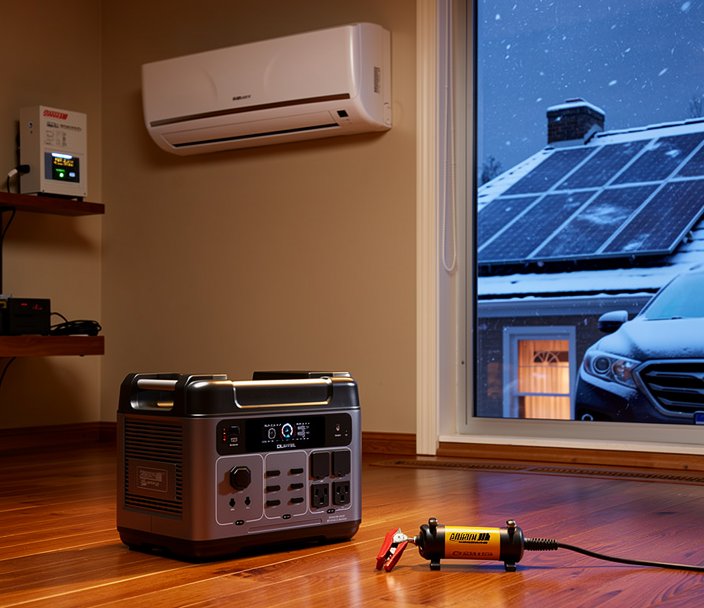
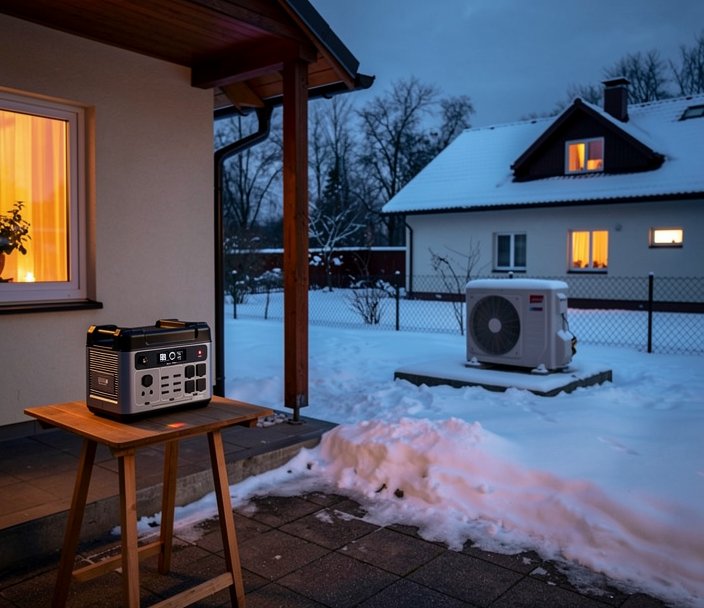
C'est là que le stockage d'énergie portable entre en jeu. Plus qu'une simple « batterie de secours », c'est une bouée de sauvetage en cas d'urgence hivernale, qui maintient les systèmes de chauffage essentiels en marche, les canaux de communication ouverts, et votre vie quotidienne fonctionne normalement pendant les coupures de courant.
Pourquoi les coupures de courant hivernales sont plus destructrices en Europe qu'en été
Toutes les coupures de courant ne se valent pas. Les coupures hivernales comportent des risques uniques qui les rendent bien plus destructrices que celles des autres saisons. Voici les points clés à connaître :
Risques liés au froid extrême : la sécurité avant tout
Le plus grand danger des coupures hivernales, c'est le froid lui-même. La plupart des foyers européens dépendent du chauffage électrique (radiateurs, pompes à chaleur, cheminées électriques) – une coupure signifie donc une perte de chaleur immédiate. Les températures intérieures peuvent chuter à des niveaux dangereux en quelques heures, exposant les personnes âgées, les enfants et les personnes fragiles à des risques d'hypothermie ou d'engelures. Même les tuyaux d'eau peuvent geler et éclater, provoquant des dégâts coûteux et difficiles à réparer par temps glacial.
Des coupures plus longues : une intervention plus lente
La neige, la glace et les vents violents ne provoquent pas seulement des coupures, ils ralentissent aussi considérablement les réparations. Quand les routes sont impraticables, les techniciens ne peuvent pas atteindre en sécurité les lignes tombées ou les transformateurs endommagés. Une coupure qui peut être rétablie en seulement 2 heures en été peut durer 12, 24, voire 48 heures en hiver, laissant les foyers sans électricité ni chauffage pendant de longues périodes.
Une dépendance accrue à l'électricité : indispensable au quotidien hivernal
Les foyers européens consomment 20 à 30 % d'électricité en plus en hiver qu'en été. Outre le chauffage, il faut de l'électricité pour les couvertures chauffantes, les bouilloires et les petits appareils de cuisine pour réchauffer les aliments. Sans électricité, même des tâches simples comme préparer une tasse de thé ou réchauffer un repas deviennent impossibles—la qualité de vie chute.
Perturbations des communications : l'isolement aggrave la panique
Après une coupure, les routeurs s'arrêtent et les chargeurs de téléphone deviennent souvent inutilisables. Sans accès à Internet ni téléphone fonctionnel, vous ne pouvez pas consulter les prévisions météo (pour savoir si une tempête va s'intensifier), contacter les secours ou prévenir votre famille que vous êtes en sécurité. Ce sentiment d'isolement amplifie l'anxiété, rendant une situation déjà tendue encore plus difficile à gérer.
Comment le stockage d'énergie portable résout les coupures hivernales
Les sources d'alimentation de secours traditionnelles (comme les générateurs à essence) présentent des inconvénients majeurs : ils sont bruyants, émettent des fumées d'échappement (inadaptées à un usage intérieur) et nécessitent un stockage de carburant. En revanche, la station d'énergie portable est conçue spécifiquement pour répondre aux défis uniques de l'hiver—sûre, silencieuse et prête en quelques secondes. Voici leurs principaux avantages pour les urgences hivernales en Europe :
1. Puissance instantanée : aucune installation requise, un soulagement immédiat
Aucun électricien nécessaire. Il suffit d'ouvrir le paquet de la station d'énergie portable, d'appuyer sur un bouton, et elle est prête en moins d'une minute—parfait pour une solution rapide quand vous grelottez et avez désespérément besoin de chaleur. Contrairement aux générateurs de secours qui mettent du temps à démarrer, elle comble instantanément le manque d'électricité, vous permettant de brancher immédiatement une couverture chauffante ou un petit chauffage.
2. Fonctionnement sûr et stable à basse température
Les systèmes de stockage d'énergie portable haut de gamme (équipés de batteries Lithium fer phosphate) sont conçus pour résister aux rigueurs des hivers européens. Ils fonctionnent de manière stable à des températures aussi basses que -10°C—bien en dessous de la température hivernale moyenne dans la plupart des pays européens. Vous pouvez la ranger dans un garage ou un couloir (sans chauffage) et être assuré qu'elle fonctionnera normalement même quand les températures chutent.
3. Silencieux et écologique : chaleur et continuité
Contrairement aux générateurs à essence bruyants et polluants, les systèmes de stockage d'énergie portable fonctionnent en silence total. Vous pouvez les utiliser dans votre salon ou votre chambre sans perturber votre sommeil (essentiel lors de coupures prolongées). Ils ne produisent aucune émission, donc pas de risque d'intoxication au monoxyde de carbone—un danger courant avec les générateurs à carburant dans les espaces clos.
4. Compatibilité multi-ports : alimenter tous les appareils essentiels simultanément
Les systèmes de stockage d'énergie portable modernes sont équipés de plusieurs ports : une prise secteur pour brancher chauffages et bouilloires, un port USB pour charger les téléphones portables, et un port Type-C pour les tablettes et ordinateurs portables. Pas besoin de choisir entre chaleur et communication—vous pouvez avoir les deux.
Principaux cas d'usage : rester au chaud et connecté pendant les coupures hivernales
Une station d'énergie portable n'est pas un outil à usage unique—elle s'adapte à vos besoins hivernaux les plus critiques. Voici un aperçu des principaux cas d'usage, avec un tableau pratique des appareils courants, de leurs besoins en puissance et de la durée de fonctionnement avec une station de 1000Wh :
1. Cas d'usage principaux et référence de durée de fonctionnement
|
Cas d'usage
|
Nom de l'appareil
|
Puissance typique (W)
|
Durée avec une station de 1000Wh
|
Valeur essentielle
|
|---|---|---|---|---|
|
Maintenir la chaleur
|
Petit chauffage électrique
|
500-1000
|
1 à 2 heures
|
Chauffer chambres/salon (espaces critiques)
|
|
Couverture chauffante
|
60
|
Plus de 16 heures
|
Chaleur ciblée et sûre pour dormir
|
|
|
Rester connecté
|
Routeur domestique
|
20
|
Plus de 48 heures
|
Accéder aux prévisions météo et alertes d'urgence
|
|
Smartphone (charge)
|
25
|
5 à 8 charges complètes
|
Rester en contact avec la famille et les amis
|
|
|
Besoins essentiels du quotidien
|
Bouilloire électrique
|
1500
|
40 minutes
|
Faire bouillir de l'eau pour boissons/réchauffer les aliments
|
|
Lampe LED de secours
|
10
|
Plus de 100 heures
|
Éclairage sûr (évite les risques d'incendie liés aux bougies)
|
|
|
Besoins spéciaux / équipements
|
Appareil CPAP
|
30
|
Plus de 33 heures
|
Soutien vital pour les personnes souffrant d'apnée du sommeil
|
|
Mini-réfrigérateur
|
50
|
20 heures
|
Prévenir la détérioration des aliments lors de longues coupures
|
Comment choisir une station d'énergie portable pour les urgences hivernales
Toutes les stations d'énergie portables ne conviennent pas à l'hiver. Utilisez la liste suivante pour trouver l'appareil le plus adapté à votre maison :
✅ 1. Privilégiez une puissance de sortie continue de 1500W ou plus
Votre station d'énergie doit pouvoir alimenter votre appareil le plus puissant (généralement un petit chauffage électrique). Choisissez au moins 1500W de puissance de sortie continue (pas la puissance de crête) pour éviter la surcharge. Exemple : un chauffage électrique de 1000W nécessite une station d'énergie de 1500W ou plus pour fonctionner en toute sécurité.
✅ 2. Choisissez une capacité de 1000Wh ou plus et des batteries Lithium fer phosphate
La capacité (en Wh) détermine la durée de fonctionnement de l'appareil. Une capacité de 1000Wh ou plus est idéale pour les urgences hivernales—couvrant le chauffage, la communication et les besoins essentiels. Choisissez des batteries Lithium fer phosphate : elles sont plus durables (plus de 4000 cycles de charge-décharge), plus sûres et plus performantes que les batteries lithium-ion classiques à basse température.
✅ 3. Assurez une résistance aux basses températures (fonctionne à -10°C)
Choisissez des appareils étiquetés « Large plage de températures » ou « Fonctionne à -10°C ». Évitez les modèles qui ne fonctionnent qu'au-dessus de 0°C—ils tomberont en panne pendant les périodes les plus critiques de l'hiver européen.
✅ 4. Choisissez des appareils prenant en charge la charge rapide pour les coupures prolongées
La charge rapide est essentielle pour les coupures de plusieurs jours. Choisissez des appareils prenant en charge la charge rapide sur secteur (par exemple, 0-80 % en 30 à 60 minutes) pour une reconstitution rapide lorsque l'électricité est brièvement rétablie. Vous pouvez aussi opter pour des appareils prenant en charge une entrée solaire de 400W ou plus pour une charge hors-réseau—idéal dans les zones isolées.
✅ 5. Privilégiez les fonctions de sécurité essentielles
L'utilisation hivernale implique des températures basses et un fonctionnement en intérieur. Recherchez des fonctions de sécurité telles que la protection contre la surchauffe, la protection contre les courts-circuits et la protection contre les surintensités—ces fonctions évitent les dysfonctionnements dans des conditions difficiles.
Conseils pratiques pour utiliser une station d'énergie portable en hiver
Même les meilleures stations d'énergie donnent de meilleurs résultats lorsqu'elles sont bien entretenues. Suivez ces conseils spécifiques à l'hiver pour maximiser leur efficacité :
- ❄️ Chargez avant les tempêtes : Consultez régulièrement les prévisions météo. Quand des blizzards ou des vagues de froid sont annoncés, chargez votre station d'énergie à 100 % et rangez-la dans un endroit chaud (comme un placard ou un couloir)—les basses températures peuvent réduire temporairement la capacité de la batterie.
- ❄️ Rangez-la dans un endroit chaud : Ne laissez jamais votre station d'énergie à l'extérieur ou dans un garage non chauffé. Rangez-la à température ambiante pour garantir qu'elle fournisse toute sa puissance quand vous en avez le plus besoin.
- ❄️ Économisez l'énergie efficacement : Priorisez les appareils essentiels : le chauffage d'abord, puis la communication, et enfin les besoins de base. Utilisez des alternatives à faible consommation (comme une couverture chauffante au lieu d'un chauffage) pour prolonger l'autonomie. Éteignez les appareils lorsqu'ils ne sont pas utilisés.
- ❄️ Effectuez un entretien mensuel : Les batteries se déchargent plus vite si elles restent inutilisées pendant de longues périodes en hiver. Rechargez la station d'énergie à 50-80 % chaque mois pour maintenir l'activité de la batterie. Vérifiez que les câbles et les ports ne sont pas endommagés—les basses températures peuvent rendre le plastique cassant.
Ne laissez pas les coupures hivernales vous prendre au dépourvu
Les hivers européens sont beaux, mais aussi pleins d'incertitudes. Une coupure de courant soudaine peut transformer le confort de la maison en une situation tendue et dangereuse. Les stations d'énergie portables ne sont pas un simple « bonus »—elles sont essentielles. Elles peuvent protéger la chaleur de votre famille, garantir une communication ininterrompue et répondre à vos besoins essentiels pendant les coupures de courant.
Que vous fassiez face à une coupure de courte durée ou à une panne de plusieurs jours, la bonne station d'énergie portable peut transformer la panique en tranquillité d'esprit. Elle vous permet de rester au chaud, connecté et maître de la situation dans l'obscurité, au lieu de grelotter dans le noir.
Êtes-vous prêt pour les coupures hivernales ?

Achetez maintenant et profitez d'un hiver chaud et sans souci.
Partagez votre expérience : Avez-vous déjà vécu une coupure de courant hivernale en Europe ? Comment restez-vous au chaud et connecté ? Laissez un commentaire ci-dessous—nous serions ravis de connaître vos astuces !
Latest articles
OUKITEL Power Brings Full-Scenario Energy Storage Solutions to Intersolar Middle East 2026 in Dubai

OUKITEL présente ses solutions de stockage d'énergie à Intersolar South America 2026, accélérant son expansion en Amérique latine
Le guide du propriétaire européen pour réduire sa facture de pompe à chaleur grâce au stockage d'énergie et aux tarifs intelligents
Dimensionner le solaire et la batterie pour une pompe à chaleur en hiver : guide pour climats froids en Europe (Allemagne, Suède, Ukraine)
Guide de survie en cas de coupure de courant avec une pompe à chaleur : optimiser votre batterie lors de pannes hivernales de plusieurs jours