C01
C01


Allègement fiscal polonais pour la modernisation des batteries domestiques : guide d'éligibilité et de demande
Pour les propriétaires polonais envisageant de passer à l'autosuffisance énergétique, l'allègement fiscal pour la modernisation (ulga termomodernizacyjna) est l'un des outils les plus efficaces disponibles en 2026. Beaucoup ignorent encore que depuis le 1er janvier 2025, les systèmes fixes de stockage d'énergie domestique ont rejoint la liste des dépenses éligibles — un changement qui peut considérablement améliorer le retour sur investissement d'une installation solaire avec stockage. Ce guide explique précisément comment fonctionne cet allègement, quels systèmes de batterie sont éligibles, combien vous pouvez économiser, et où les erreurs courantes peuvent compromettre une demande par ailleurs valide.

Comme ce programme polonais fonctionne comme une déduction du revenu imposable — et non comme un remboursement direct — il s'inscrit aux côtés d'autres mécanismes européens comme les déductions fiscales pour le stockage d'énergie en Europe. Comprendre comment il interagit avec des subventions telles que Mój Prąd est ce qui distingue une demande bien optimisée d'une opportunité manquée.
Qu'est-ce que l'allègement fiscal pour la modernisation et couvre-t-il les batteries domestiques ?
L'allègement fiscal pour la modernisation est une déduction fiscale polonaise sur le revenu, conçue pour encourager la modernisation thermique des maisons individuelles. Jusqu'en 2024, la liste des dépenses éligibles couvrait l'isolation, les fenêtres, le remplacement du système de chauffage, les panneaux photovoltaïques et les capteurs solaires. À compter du 1er janvier 2025, le ministère du Développement et de la Technologie a ajouté les systèmes de stockage d'énergie et les systèmes de stockage de chaleur ainsi que les infrastructures nécessaires à la réglementation.
Ce changement signifie que si vous installez une batterie fixe qui stocke l'électricité produite par votre source d'énergie renouvelable domestique — généralement des panneaux photovoltaïques en toiture — les coûts d'achat et d'installation peuvent être déduits de votre revenu lors de votre déclaration fiscale annuelle. L'allègement ne requiert pas que la batterie soit installée en même temps que les panneaux photovoltaïques ; l'ajout d'une batterie à une installation solaire existante est explicitement autorisé.
Une bonne façon de voir les choses : l'administration fiscale considère la batterie comme une amélioration structurelle du système énergétique de votre maison, comparable à l'installation de fenêtres à triple vitrage ou d'une nouvelle pompe à chaleur. Comme la déduction est appliquée au revenu avant le calcul de l'impôt, l'économie réelle dépend de votre taux marginal d'imposition — mais nous y reviendrons plus tard.
Combien pouvez-vous économiser ? Calcul de la déduction fiscale
Le programme vous permet de déduire 100 % des coûts éligibles de votre revenu annuel, et non de l'impôt lui-même. La limite supérieure est de 53 000 PLN par contribuable (106 000 PLN pour les couples mariés déclarant conjointement) pour l'ensemble des travaux de modernisation sur plusieurs années. Ce plafond couvre toutes les dépenses éligibles — isolation, fenêtres, remplacement de la source de chaleur, photovoltaïque, capteurs solaires, et désormais stockage d'énergie — sur plusieurs années fiscales.
Comme la déduction réduit le revenu imposable plutôt que l'impôt directement, l'économie réelle dépend de votre taux marginal d'imposition. Par exemple, un contribuable dans une tranche inférieure verra un avantage net plus faible qu'une personne dans la tranche la plus élevée, même si le coût de la batterie est identique. Pour estimer votre propre économie, multipliez la dépense éligible par votre taux marginal actuel et vérifiez les seuils officiels des taux d'imposition pour l'année de déclaration. Pour un calcul précis, consultez un conseiller fiscal ou utilisez les outils en ligne de l'administration fiscale.
Si la déduction ne peut pas être entièrement utilisée l'année de la dépense — par exemple parce que le revenu est trop faible — la partie non utilisée peut être reportée sur les six années fiscales suivantes. Ce report rend l'allègement intéressant même pour les ménages ayant temporairement des revenus plus faibles.
Exemple de cas positif : Kamil, propriétaire près de Poznań, possédait déjà un système photovoltaïque de 6 kWc. En mars 2026, il a ajouté une batterie domestique fixe de 12 kWh au lithium fer phosphate, coûtant 24 000 PLN installation comprise. Il a gagné 120 000 PLN en 2026, imposé à 17 % (première tranche) avec l'abattement fiscal. Il a déduit les 24 000 PLN, réduisant son revenu imposable à 96 000 PLN. L'impôt économisé était d'environ 4 080 PLN, et il restait bien en dessous du plafond de 53 000 PLN. Sa déclaration a été traitée sans objection.
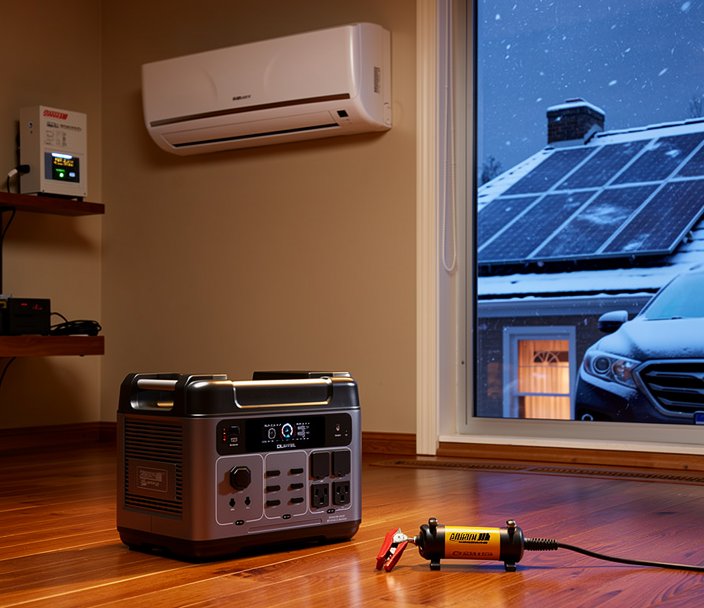
Exemple de cas négatif : Anna a acheté une station d'énergie portable d'une capacité de 2 kWh pour 5 000 PLN, pensant qu'elle serait éligible en tant que « stockage d'énergie » au titre de l'allègement. L'appareil était mobile, avec une poignée et des roues, et utilisé à la maison et en camping. Son bureau des impôts a rejeté la déduction car la loi exige explicitement un système de stockage fixe, installé en permanence à l'adresse de l'installation zéro émission. Anna a dû rembourser le montant non déduit plus les intérêts. La leçon : les batteries mobiles, les batteries de véhicules et les appareils plug-and-play qui ne sont pas structurellement intégrés au bâtiment ne comptent pas.
Conditions d'éligibilité : quels systèmes de batterie sont éligibles ?
Trois conditions déterminent si une batterie domestique répond aux critères de l'administration fiscale :
- Installation permanente. L'unité de stockage doit être fixée au bâtiment ou à la propriété de manière à faire structurellement partie de l'infrastructure énergétique de la maison. Les unités sur roues, avec poignées de transport ou supports à déconnexion rapide conçus pour la portabilité ne sont pas éligibles.
- Maison individuelle. L'allègement est disponible uniquement pour les propriétaires (ou copropriétaires) de maisons individuelles. Les appartements dans des immeubles collectifs et les bâtiments en construction sont exclus. Le bâtiment doit être une structure existante et achevée au moment où la dépense est engagée.
- Infrastructure fonctionnelle. Le système doit inclure le câblage nécessaire, les connexions à l'onduleur et les dispositifs de sécurité requis pour fonctionner avec la source renouvelable. Bien que la réglementation fiscale ne liste pas de certifications spécifiques, la pratique du marché exige la conformité aux normes de sécurité européennes telles que la norme IEC 62619 pour les batteries lithium stationnaires. Les systèmes qui ne peuvent pas démontrer une intégration sûre avec le réseau ou l'installation électrique de la maison peuvent être remis en question lors d'un contrôle.
D'autres mécanismes de soutien, par exemple les programmes de subventions qui coexistent avec l'allègement fiscal, peuvent avoir leurs propres seuils de capacité et périodes de demande. Pour l'allègement fiscal lui-même, il n'y a pas de capacité minimale légale. Une batterie de n'importe quelle taille pourrait être éligible tant qu'elle est installée en permanence. Cependant, les petits systèmes peuvent présenter un inconvénient coût-bénéfice car la même déduction produirait une économie absolue plus faible, et la charge documentaire est identique.
Une autre nuance : l'allègement couvre l'ensemble du système de batterie en tant que projet de modernisation, mais il ne requiert pas que 100 % de l'énergie stockée provienne du photovoltaïque. La batterie doit être installée à la même adresse que l'installation renouvelable, mais la loi ne précise pas quelle fraction de la charge peut provenir du réseau. Un scénario hybride — la batterie se charge avec le solaire pendant la journée et avec le réseau pendant les heures creuses — devrait rester éligible, à condition que la batterie fasse structurellement partie de l'installation OZE (source d'énergie renouvelable) de la maison.
Guide étape par étape pour demander l'allègement dans votre déclaration fiscale
Faire la demande correctement suit un chemin simple, mais manquer une seule étape peut entraîner des retards ou un rejet. Voici la séquence pour l'année fiscale 2026 (déclarée en 2027) :
- Vérifiez votre statut. Confirmez que vous êtes propriétaire ou copropriétaire d'une maison individuelle déjà construite et habitée. Si vous construisez un nouveau bâtiment, les dépenses ne peuvent être déduites qu'après l'achèvement de la construction et la mise en service du bâtiment.
- Confirmez que la batterie est fixe. Passez en revue votre installation avec l'installateur. La batterie doit être montée au mur, fixée au sol, ou autrement intégrée. Demandez une déclaration écrite de l'installateur décrivant la méthode de fixation.
- Collectez les documents. Conservez les factures avec TVA et les preuves de paiement (reçus de virement bancaire, relevés de carte). La facture doit clairement décrire le système de stockage, son coût et la date d'installation. Bien que l'administration fiscale n'exige pas de pièce jointe séparée, vous devez conserver ces documents pendant la durée de conservation imposée par la loi fiscale polonaise (vérifiez la durée actuelle auprès de votre bureau des impôts ou des directives officielles).
- Calculez votre utilisation du plafond. Additionnez toutes les déductions de modernisation précédentes (isolation, fenêtres, pompe à chaleur, photovoltaïque, etc.) que vous avez demandées. Le total combiné sur l'ensemble de vos demandes ne peut pas dépasser 53 000 PLN (ou 106 000 PLN pour un couple marié). Si vous êtes proche de la limite, répartissez la déduction stratégiquement — peut-être en l'étalant sur deux années fiscales si vous avez d'autres dépenses de modernisation à venir.
- Remplissez la déclaration fiscale. Sur le formulaire PIT-28 (pour les contribuables au forfait) ou PIT-36 (pour les travailleurs indépendants ou les revenus salariés standard), saisissez le montant déductible dans le champ « ulga termomodernizacyjna ». La plupart des systèmes de déclaration électronique mettent ce champ en évidence. Si vous utilisez un conseiller fiscal, fournissez-lui le total exact incluant la main-d'œuvre d'installation.
- Déposez avant le 30 avril. La déclaration fiscale pour 2026 doit être soumise avant le 30 avril 2027. Un dépôt tardif peut entraîner la perte de la déduction pour cette année, bien que le report permette toujours de la demander une année ultérieure si le projet a été achevé dans la fenêtre de trois ans à compter de la première dépense.
- Terminez le projet dans les trois ans. Si l'installation de la batterie a commencé en 2026, tous les coûts associés doivent être engagés et le système doit être opérationnel avant le 31 décembre 2029. Les projets qui dépassent la limite de trois ans perdent leur éligibilité à la déduction.
Un conseil pratique : lorsque vous payez l'installateur, utilisez un mode de paiement traçable — virement bancaire, pas d'espèces. Bien que les paiements en espèces soient techniquement autorisés, une trace écrite claire facilite un contrôle et élimine tout doute sur la date de la dépense.
Erreurs courantes dans les demandes et comment les éviter
Les bureaux des impôts en Pologne constatent une augmentation des demandes liées aux batteries, et leur examen se concentre sur quelques erreurs récurrentes. Les éviter vous fera gagner du temps et évitera des rappels d'impôts potentiels.
Demander pour des bâtiments en construction. Certains propriétaires commencent l'installation d'une batterie avant l'obtention du permis d'occupation, pensant que la dépense sera éligible une fois qu'ils emménageront. La loi stipule explicitement que le bâtiment doit être une résidence individuelle existante au moment où la dépense est engagée. Si vous n'avez pas encore reçu votre permis d'occupation, attendez qu'il soit finalisé avant de payer le système de stockage.
Dépasser le plafond de 53 000 PLN sur la durée de vie. Le plafond couvre toutes les déductions de modernisation que vous avez jamais demandées, pas seulement la batterie. Les contribuables qui ont précédemment déduit une pompe à chaleur, des panneaux photovoltaïques et le remplacement de fenêtres peuvent déjà être proches de la limite. Une nouvelle batterie pourrait les faire dépasser. Avant de vous engager dans un achat, faites le total de toutes les déductions passées. Si votre total dépasserait le plafond, soit étalez la dépense de la batterie sur deux années fiscales (en divisant les factures), soit reconnaissez qu'une partie du coût ne sera pas déductible.
Batteries mobiles ou portables. Comme le montre le cas d'Anna, toute batterie qui peut être débranchée et déplacée sans modification structurelle n'est pas éligible. L'administration fiscale recoupe la description des biens avec la définition légale de magazyn energii en tant qu'installation fixe. Si la facture indique « station d'énergie portable », « batterie externe », ou décrit des roues ou des poignées de transport, la demande sera rejetée.
Non-respect du délai de trois ans pour l'achèvement. Le compte à rebours commence à la première dépense engagée. Si vous achetez la batterie en 2026 mais ne terminez l'installation électrique qu'en 2030, tout le projet est hors délai. Assurez-vous que l'installateur s'engage à une date d'achèvement avant la fin de la fenêtre de trois ans.
Ne pas réconcilier avec les autres subventions. L'allègement fiscal peut coexister avec la subvention Mój Prąd (Mon Électricité) et d'autres programmes régionaux, mais si vous recevez un remboursement pour une partie des dépenses déduites, vous devez ajouter ce montant à votre revenu l'année où vous le recevez. Ne pas le faire entraîne une sous-déclaration et des pénalités possibles.
Pour une vue d'ensemble de la manière dont les différents types d'incitations interagissent à travers le continent, consultez notre article sur les crédits d'impôt pour le stockage d'énergie domestique en Europe.
Questions fréquemment posées
L'allègement fiscal est-il disponible pour la rénovation ou uniquement pour les nouvelles installations ?
Il est disponible pour les deux. Vous pouvez ajouter une batterie à un système photovoltaïque existant installé des années plus tôt. L'allègement ne nécessite pas que le stockage et la source de production soient installés simultanément. Tant que la batterie est fixe et située à la même adresse que l'installation renouvelable, elle est éligible, quel que soit le moment où le photovoltaïque a été mis en service.
Puis-je demander l'allègement si j'ai déjà utilisé l'allègement pour d'autres travaux de modernisation ?
Oui, mais uniquement dans la limite du plafond de 53 000 PLN sur la durée de vie par contribuable. Vous devez totaliser toutes les déductions passées — isolation, fenêtres, pompe à chaleur, photovoltaïque, capteurs solaires — et vérifier si la dépense de la batterie vous ferait dépasser la limite. Si c'est le cas, vous pouvez soit déduire uniquement la partie qui entre dans le plafond, soit planifier la dépense sur plusieurs années, à condition que le projet soit achevé dans les trois ans à compter de la première dépense.
Quels documents dois-je conserver pour appuyer ma demande ?
Vous devez conserver les factures avec TVA pour la batterie et l'installation, ainsi que les preuves de paiement (confirmations de virement bancaire ou relevés de carte). Conservez ces documents pendant la durée requise par la loi fiscale (vérifiez la durée actuelle auprès du bureau des impôts). Bien qu'aucune pièce jointe séparée ne soit requise avec la déclaration fiscale, l'administration fiscale peut les demander lors d'un contrôle. Une déclaration écrite de l'installateur confirmant que la batterie est montée en permanence est également recommandée.
Comment cet allègement interagit-il avec d'autres subventions comme Mój Prąd ?
L'allègement fiscal pour la modernisation fonctionne indépendamment des subventions — vous pouvez demander les deux. Cependant, si vous recevez plus tard un remboursement de Mój Prąd ou d'une autre subvention pour une partie des dépenses déduites, vous devez ajouter le montant remboursé à votre revenu l'année où vous le recevez. Cela garantit que vous ne bénéficiez pas deux fois de la même dépense. Planifiez votre trésorerie et votre planification fiscale en conséquence.
Conclusion
L'allègement fiscal polonais pour la modernisation transforme une batterie domestique d'un coût purement sorti de poche en une amélioration fiscalement avantageuse. La règle de décision clé est simple : si la batterie est fixe, installée dans une maison individuelle existante, et que la déduction totale reste sous 53 000 PLN pour tous les projets de modernisation, la demande est simple et vaut la peine d'être faite. Là où les propriétaires rencontrent des problèmes, c'est lorsqu'ils confondent un appareil portable avec une installation fixe ou perdent la trace du plafond cumulatif. Avant de signer le contrat, vérifiez la méthode d'installation et faites le total de vos déductions passées. Ensuite, à la saison des impôts, vous économiserez de l'argent sans surprises.
Les informations de cet article ont été vérifiées par rapport à des sources actuelles en juillet 2026. Les politiques, les programmes d'incitation et les réglementations changent fréquemment — vérifiez toujours les conditions actuelles auprès de sources officielles avant de prendre des décisions financières ou juridiques.
Latest articles
OUKITEL Power Brings Full-Scenario Energy Storage Solutions to Intersolar Middle East 2026 in Dubai
OUKITEL présente ses solutions de stockage d'énergie à Intersolar South America 2026, accélérant son expansion en Amérique latine
Le guide du propriétaire européen pour réduire sa facture de pompe à chaleur grâce au stockage d'énergie et aux tarifs intelligents
Dimensionner le solaire et la batterie pour une pompe à chaleur en hiver : guide pour climats froids en Europe (Allemagne, Suède, Ukraine)
Guide de survie en cas de coupure de courant avec une pompe à chaleur : optimiser votre batterie lors de pannes hivernales de plusieurs jours